By Muhammad Younas
TIRAH VALLEY / BARA — When Yaseen Khan returned to his village of Donga in Shalobar, Tirah Valley, eight years ago, he believed the worst chapter of his life had ended.
“We came back after years of militancy and displacement,” he says. “My father and I tried to rebuild our home and our lives. Everything had changed — the houses, the paths, even the forests were gone.”
With elderly parents to support, Yaseen began rebuilding his damaged house step by step. Winters were harsh, daily costs were high, and work was limited, yet hope kept them going. After six years of struggle, the house still remained unfinished.
Read More:
“Now I have stopped rebuilding,” he says quietly. “Once again, we are preparing to leave. This is another displacement.”
This time, Yaseen considers himself fortunate. He has relatives and shelter in Bara. Many families around him do not.
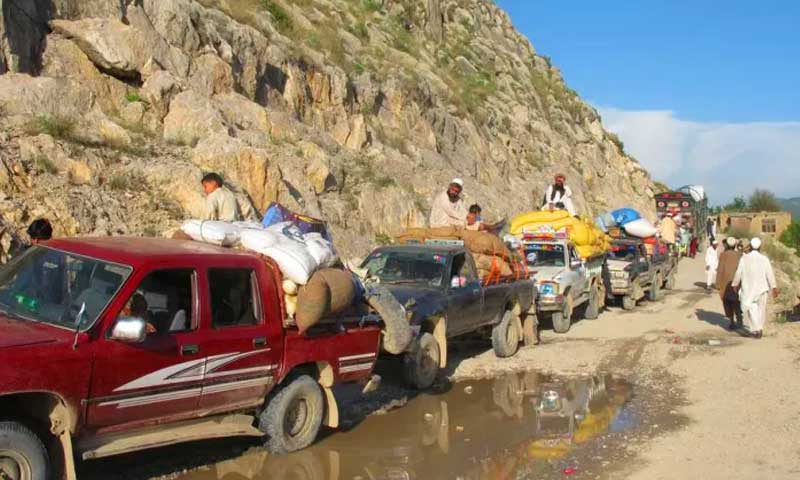
Across Tirah Valley, thousands of families are once again being uprooted. Communities from Aalam Kallay, Kandawray and Spinkai Tiga are among those leaving their homes amid uncertainty and fear.
Long lines of vehicles stretch for kilometres from Larr Bagh to Bar Bagh, Peer Mela, and onward toward Painda Cheena. Families wait for hours and sometimes days in freezing weather. Children, women, the elderly and injured travel together, often without basic facilities.
“We have been stuck on this road for four days,” said one injured resident near the Nangrosa area of Upper Bara. “There is no clear system. People are exhausted.”
Local residents fear that without urgent coordination, the situation could turn into a serious humanitarian tragedy.
In response to the unfolding situation, the Khyber Pakhtunkhwa government has released Rs 4 billion for the assistance of Temporarily Displaced Persons from Khyber District, particularly those affected in Tirah Valley.
According to an official notification issued by the Relief, Rehabilitation and Settlement Department, the funds have been allocated from the 2025–26 provincial budget and will be managed through the Provincial Disaster Management Authority.
The assistance is intended to cover food support, temporary shelter, and transportation for displaced families. Officials say the funds will be spent under approved financial rules to ensure accountability.
Meanwhile, a seven-member Tirah Akakhel committee, including former MPA Shafiq Afridi, National Council Chairman Haji Khayal Zaman, and Haji Ajab Khan, met with the Deputy Commissioner of Khyber to discuss the possible evacuation of Akakhel areas.
The Deputy Commissioner assured the delegation that efforts would be made to minimise hardship during registration and evacuation.
On Wednesday, a Member of the National Assembly and a Member of the Provincial Assembly visited the Mandi Kass facilitation centre in Bara, where they listened to complaints from displaced families.
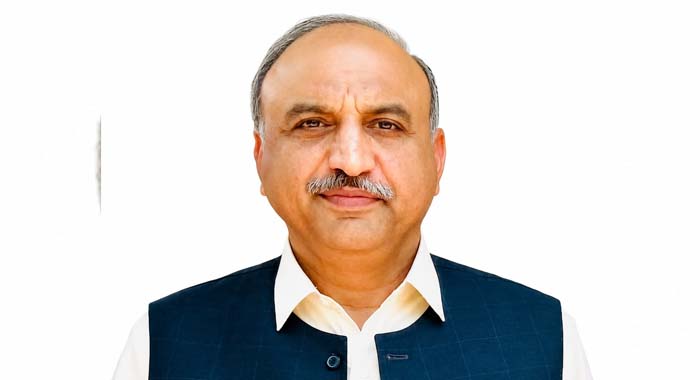
MPA abdu Ghani Afridi stated that additional registration desks had been set up on the instructions of the Chief Minister of Khyber Pakhtunkhwa.
“I feel deeply disturbed seeing my people suffer on the roads,” said Muhammad Sadiq, a local journalist and social worker.
Unofficially, more than 5,000 families have been registered so far, according to local journalists, though the absence of a coordinated mechanism makes verification difficult.
For families like Yaseen Khan’s, displacement is not just a policy issue or a budget line. It is the repeated loss of stability, dignity and hope.