By Riaz Hussain
PESHAWAR: For Pakistan, a crisis thousands of kilometres away in the Middle East could eventually show up at petrol stations, on electricity bills and in the prices of everyday goods.
Growing tensions around two of the world’s most important maritime chokepoints — the Strait of Hormuz and the Bab el-Mandeb Strait — are raising concerns about the flow of oil, liquefied natural gas (LNG) and other goods between the Middle East, Asia and Europe.
A prolonged disruption at either route could increase global energy prices, shipping and insurance costs and, in turn, put additional pressure on countries such as Pakistan that rely heavily on imported energy.
The impact, however, would depend on the duration and severity of any disruption, the availability of alternative supplies and routes, and conditions in global energy markets.
Why Pakistan is vulnerable:
Pakistan imports a large share of its energy needs, making the country particularly exposed to changes in international oil prices.
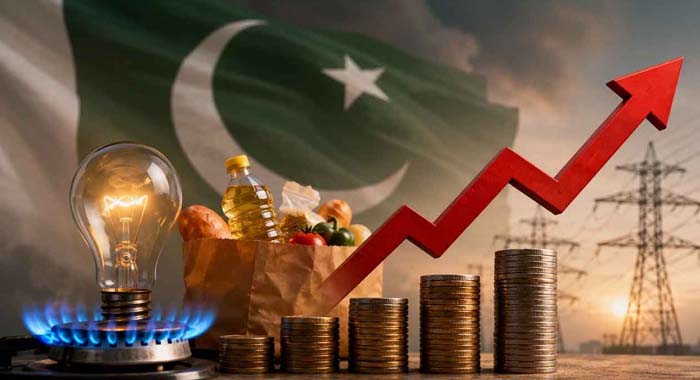
Higher crude prices would increase the cost of energy imports and could widen the country’s import bill. More expensive petrol and diesel could then raise transportation, freight and agricultural costs, with businesses potentially passing some of those additional expenses on to consumers.
Higher energy costs can increase industrial production expenses and put additional pressure on the electricity sector. At the same time, a larger energy import bill could increase demand for foreign currency, adding to pressure on Pakistan’s external finances.
Senior journalist Tahir Khan said a rise in international crude prices could therefore affect Pakistan through several channels.
“More expensive oil can increase the import bill, while higher petrol and diesel prices can raise transportation, freight and agricultural costs,” Khan said.
He added that higher energy costs could also affect industrial production and electricity generation, while increased spending on energy imports could put additional pressure on foreign exchange reserves and the rupee.
Any prolonged disruption around Hormuz could also affect LNG supplies, potentially increasing the cost of imported energy and adding pressure to electricity generation.
Why the Strait of Hormuz matters:
The Strait of Hormuz lies between Iran and Oman and connects the Persian Gulf with the Gulf of Oman and the Arabian Sea.
It is one of the world’s most important energy corridors.
According to the U.S. Energy Information Administration (EIA), an average of about 20.9 million barrels of oil per day passed through Hormuz during the first half of 2025 — roughly one-quarter of global seaborne oil trade.
Large volumes of LNG also move through the strait. EIA data shows that around 11.4 billion cubic feet per day of LNG passed through the waterway during the same period.
Because so much energy moves through such a narrow maritime corridor, even a serious security disruption could have consequences far beyond the Gulf.
There are alternative export routes:
Saudi Arabia and the United Arab Emirates, for example, have pipelines that can bypass Hormuz to some extent. But those routes do not have enough capacity to completely replace the volumes normally transported through the strait.
Bab el-Mandeb: The other critical chokepoint
At the southern end of the Red Sea lies the Bab el-Mandeb Strait, separating Yemen from Djibouti and Eritrea.
The waterway connects the Red Sea with the Gulf of Aden and is an important link between the Indian Ocean and the Suez Canal route to Europe.
EIA data shows that around 4.2 million barrels of oil per day passed through Bab el-Mandeb during the first half of 2025.
The importance of the route is not limited to oil. It is also a major corridor for container ships and other commercial vessels travelling between Asia and Europe.
When security concerns have forced ships to avoid the Red Sea route, some vessels have instead travelled around Africa’s Cape of Good Hope. That longer journey can add days to shipping schedules and increase fuel, freight and insurance costs.
A prolonged disruption could therefore affect not only energy prices but also the cost and availability of goods moving through global supply chains.
What happens if both
routes are disrupted?
Hormuz and Bab el-Mandeb serve different parts of the global trading system, but their importance is interconnected.
Hormuz is particularly critical for oil and gas exports from the Gulf, while Bab el-Mandeb is a key maritime link between the Indian Ocean, Red Sea and Suez Canal.
A simultaneous and prolonged disruption could place upward pressure on crude oil and LNG prices while increasing shipping and insurance costs.
The effects could include longer delivery times, higher freight rates and further disruption to already stretched supply chains.
That does not necessarily mean an immediate worldwide shortage of oil.
Some Gulf producers have alternative pipelines and export routes, while global markets also have strategic reserves and other sources of supply. The ability of these alternatives to absorb a prolonged disruption, however, would depend on their available capacity and the duration of the crisis.
The wider economic risk:
Economist Fida Hussain said prolonged instability in the Middle East could pose a significant challenge to global economic growth and energy security.
He said pressure was increasing on strategic energy reserves in Asian and European economies and warned that sustained high energy prices could weigh on economic activity.
Hussain also highlighted the importance of Bab el-Mandeb for trade between Asia and Europe, saying a prolonged disruption could affect European economies as well as global commerce.
He referred to developments in China and its energy reserves as another factor that could influence regional economic conditions.
Some of his observations about the geopolitical motivations behind the current crisis, to compell Saudi Arabia to sign Abraham accord.
Who are the Houthis?
The Houthi movement takes its name from the al-Houthi family. Its founder and prominent early leader was Hussein Badruddin al-Houthi. The movement is now led by his brother, Abdul-Malik al-Houthi.
The group officially calls itself Ansar Allah, or “Supporters of God.”
The movement emerged in northern Yemen in the 1990s as a Zaydi religious and political movement. Zaydism is a branch of Shia Islam distinct from Iran’s Twelver Shia tradition.
The Houthis have nevertheless developed close political and military ties with Iran, which has provided support to the movement. Iran’s relationship with the Houthis has been a major factor in how the conflict is viewed within the wider regional rivalry.
Hussein al-Houthi was killed in 2004. His brother Abdul-Malik subsequently became the movement’s leader.
In 2014, the Houthis seized control of Yemen’s capital, Sanaa, triggering a broader conflict. Saudi Arabia intervened militarily in Yemen in 2015, citing concerns over the growing influence of a hostile armed group along its southern border.
The conflict has since become part of a wider regional struggle involving Yemen, Saudi Arabia, Iran and other regional and international actors.
Why the Houthis matter to global shipping?
The Houthis control territory along parts of Yemen’s Red Sea coast, giving them the ability to threaten maritime traffic in and around the Red Sea and Bab el-Mandeb.
The group has carried out attacks against commercial and military vessels during periods of heightened regional tensions. It has said that some of its maritime actions are linked to the broader Middle East conflict and has identified particular countries and vessels as targets.
The exact scope of the
group’s intentions and its relationship with Iran remain subjects of continuing geopolitical debate.
For the shipping industry, however, the practical concern is simpler: if vessels cannot safely use the Red Sea and Bab el-Mandeb, they may have to take a much longer route around Africa.
That means more fuel, more time and higher insurance and freight costs.
What it could mean for ordinary Pakistanis
For Pakistani consumers, the most visible impact would likely come through fuel and transportation costs.
If international crude prices rise sharply, the government could face pressure to increase domestic fuel prices, depending on taxation, exchange rates and its pricing policy.
Higher diesel prices could increase the cost of moving food and other goods across the country. Farmers could face higher costs for transport and agricultural machinery, while industries could see their production expenses rise.
The impact on electricity could also become significant if imported fuels such as LNG become more expensive or difficult to obtain.
But the scale of the impact is not predetermined.
Much will depend on whether disruptions remain temporary or become prolonged, how international oil producers respond, whether alternative shipping routes remain available and how global energy markets adjust.
For Pakistan, the immediate issue is therefore not simply whether Hormuz or Bab el-Mandeb remains open, but how long any disruption lasts — and how high global energy prices rise if the crisis continues.