
Muhammad Younas :
A night of continuous rain turned into an anxious morning for communities across Khyber district and the Peshawar Valley.
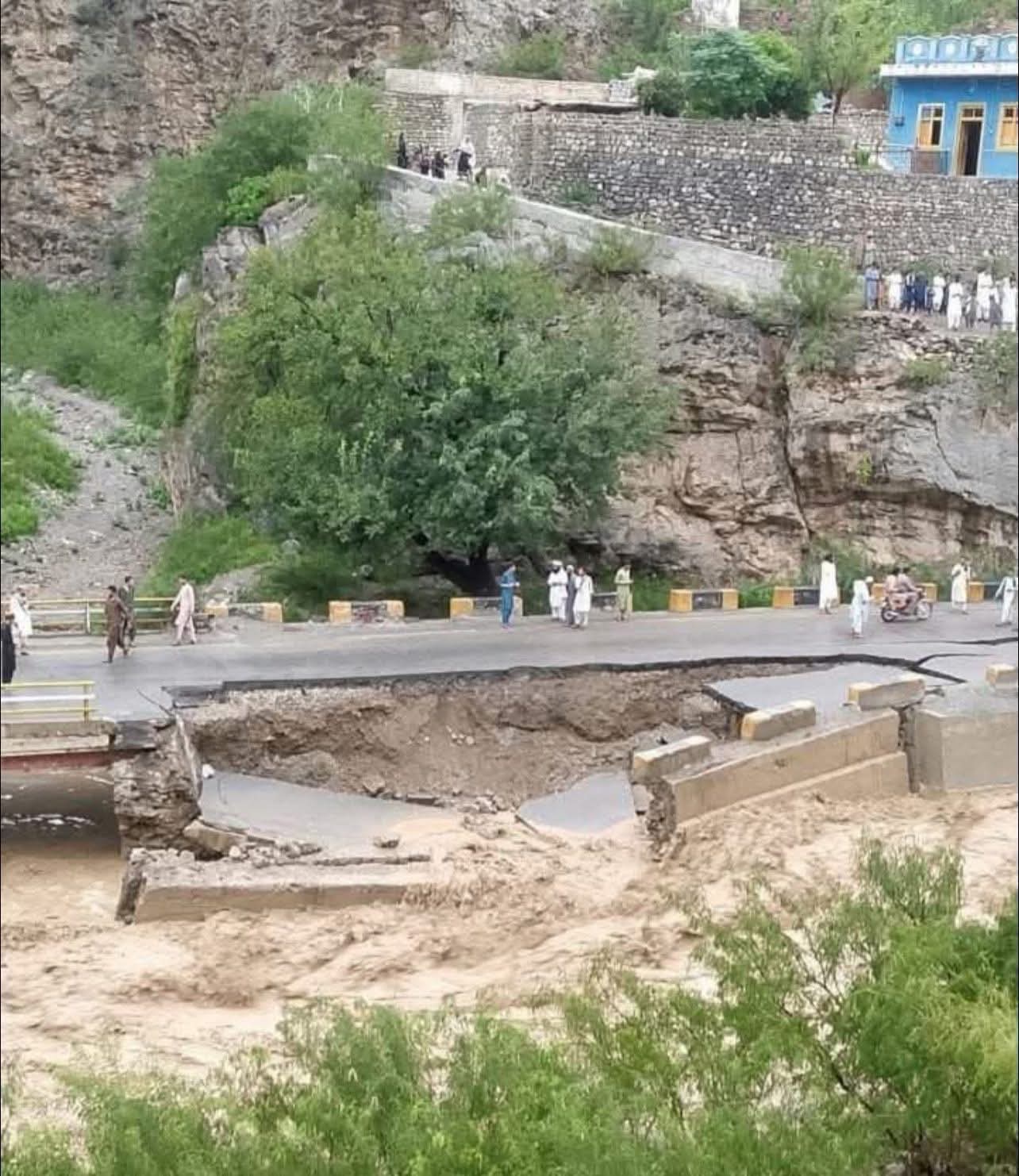
Floodwaters
entered villages, forcing families to leave their homes in search of safer ground. Many described the water rising higher than they had ever seen in their lifetimes.
The rain began late on Friday and continued until Saturday morning. Streams and natural waterways overflowed, sending water across fields and village paths. In Bara subdivision, people woke to the sound of rushing water. By dawn, households had little choice but to move their loved ones to temporary safety.
Families on the Move
Residents of Bar Qambar Khel, Kamar Khel, Bazgarah, Shinko, and Aka Khel said they had no warning before the water surrounded their homes. Families gathered what little they could and left under the cover of darkness.
“For the first time in my life, I had to take my family out of the house to safety,” said a journalist from Bar Qambar who has covered floods for many years. “The water was rising too fast. I had never seen the streams so full.”
Samin Khan, a villager from the area, explained the urgency of the moment. “Our priority was the children and the elderly. We focused only on moving them first.”
Fields Under Water
The floods reached higher ground in Shalobar and Achini, where farmers saw their crops submerged. Maize and vegetables that had taken months of care were lost within hours.
Hanif Khan, a farmer near Shalobar and Achini, stood by his waterlogged fields. “I watched the flood take everything we had grown. It was all our hard work, but we will try to start again,” he said.
Why the Flooding Was Severe
Local residents and journalists pointed out that blocked waterways and unregulated construction worsened the flooding. Many of the natural channels that once carried rainwater have narrowed or disappeared due to land use and building along riverbanks.
Local journalist Abdur Raziq observed that the devastation was not only the result of heavy rain but also of years of unchecked construction that blocked natural flood channels. With no safe outlet left, the water surged into villages and farmland, overwhelming families and leaving them struggling to protect their homes and livelihoods.
Experts agree that poor planning and the blocking of flood streams are major risks.
Meteorologists also reported that rainfall over the past two days was far higher than the seasonal average, a trend linked to changing climate patterns in Pakistan.
The Bara River Overflow
The Bara River, already swollen from rainfall, spilled over its banks and entered nearby settlements. Residents described the sound of the river as frightening.
Amin, a resident of Upper Bara, recounted the river’s terrifying rise. “The roar was deafening, and it felt as if the ground beneath us was trembling. We feared it might destroy everything around us.”
Rescue and Relief Efforts
By Saturday morning, rescue operations were underway. Rescue 1122 Khyber was active in Bara, Jamrud, and Landi Kotal under the supervision of District Emergency Engineer Shariq Riaz Khattak. Teams used heavy machinery to clear paths and worked to remove water from homes and marketplaces.
In Jamrud, rescue workers reached Khitta Kushta, Ali Masjid, Burj Kali, and Takhta Baig, advising families to avoid flood streams. In Sultan Khel, Landi Kotal, families were moved to temporary shelters. Health teams were also dispatched to prevent the spread of waterborne diseases.
A Pattern of Risk
Environmental analysts warned that the incident reflects a larger pattern. With climate change, Pakistan is facing more intense downpours, while weak infrastructure and poor planning leave many communities unprotected.
Junud Khan, a PhD scholar in Environmental Science, explained, ‘This isn’t just about a single night of rain. It reflects the combined impact of climate change, fragile infrastructure, and years of neglect.’”
Holding On to Hope
Despite the losses, communities came together in remarkable ways. Volunteers carried families to safer ground, while mosques and community halls opened their doors to host those displaced. Food and drinking water were shared among households who had little left.
Azeem Khan in Malak Din khel, standing near his flooded field, expressed both sadness and determination.
“The water has taken our work and our income, but we will find a way to start again. For now, we are just grateful that our families are safe.”
As the skies clear, the people of Khyber and the Peshawar Valley begin the difficult task of recovery.
For many, the challenge ahead is not only to rebuild homes and livelihoods but also to live with the fear that the next flood may arrive sooner than expected.