
Riaz Hussain
Pakistan is witnessing an alarming resurgence of terrorism in 2025, with independent security monitors warning that the country may be headed toward its deadliest year in a decade.
According to fresh data compiled by the Pakistan Institute of Conflict and Security Studies (PICSS) and the Centre for Research and Security Studies (CRSS), over 2,400 people have been killed in militant violence during the first nine months of the year. Analysts caution that this figure already surpasses annual tolls recorded since the peak insurgency years of 2012–2014.
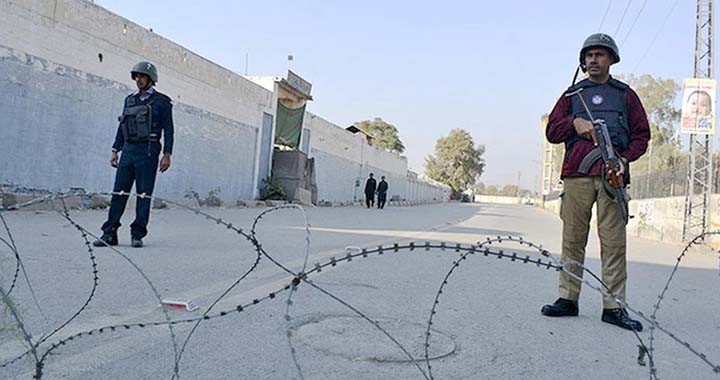
In August alone, militants carried out more than 80 attacks nationwide, leaving over 150 people dead, mostly in Khyber Pakhtunkhwa (KP) and Balochistan. September saw a slight decline in frequency with 69 reported attacks, but lethality remained severe, claiming at least 135 lives. The deadliest strike was the bombing of the Frontier Corps headquarters in Quetta, underscoring insurgents’ ability to mount high-profile operations despite sustained security crackdowns.
KP continues to bear the brunt of the violence, recording 45 attacks in September alone, largely attributed to the Tehreek-i-Taliban Pakistan (TTP) and its affiliates. Exploiting cross-border sanctuaries and fragile governance in peripheral areas, the TTP has intensified ambushes, targeted killings, and roadside bombings. In Balochistan, separatist groups such as the Baloch Liberation Army (BLA) have escalated their campaign against state forces and infrastructure projects, with the Quetta bombing highlighting their enduring operational reach.
Security experts note that while August registered a higher number of incidents, September’s attacks were deadlier per strike, suggesting a tactical shift toward high-impact operations. The dip in frequency is seen less as a sign of improvement and more as a regrouping phase, with militant outfits historically known to pause before launching fresh waves of violence.
Pakistan now faces the challenge of battling dual insurgencies: the TTP-led campaign in KP, reportedly enabled by sanctuaries across the Afghan border, and the Baloch separatist movement, fueled by both external support and longstanding grievances of political exclusion and underdevelopment. Analysts argue that both insurgencies thrive on the state’s vulnerabilities — poor governance, socioeconomic neglect, and the absence of meaningful political reforms.
Observers warn that Pakistan’s counterterrorism approach remains largely reactive, focused on military retaliation after major incidents. Past operations such as Zarb-i-Azb and Radd-ul-Fasaad disrupted militant networks but failed to address the governance and socioeconomic vacuums that militants have since reoccupied. Without a shift toward a multidimensional strategy — combining kinetic force with development, inclusion, and regional diplomacy — experts caution that militancy will continue to escalate.
As 2025 moves toward its final quarter, the grim statistics point to a resurgent insurgency that Pakistan has yet to contain. If current trends persist, this year could go down as the bloodiest since the height of the war on terror, marking not only a reversal of past gains but also a dangerous new phase in the country’s battle against extremism.