By H. Nawaz Afghan :
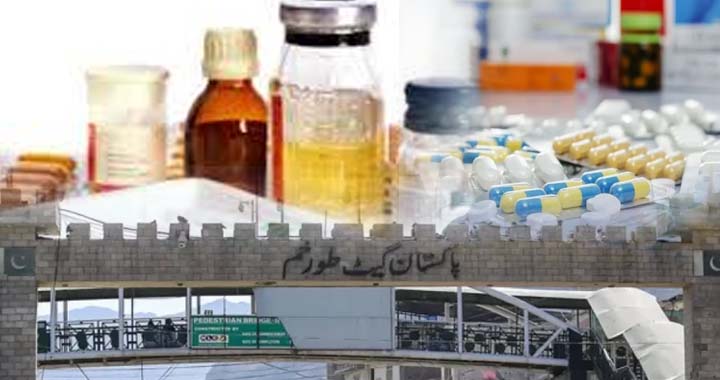
Afghanistan’s interim government has imposed a complete ban on the import of Pakistani pharmaceutical products, marking a fresh low in Pak-Afghan relations and raising serious concerns over healthcare access for millions of Afghans, while inflicting heavy losses on Pakistan’s pharmaceutical industry.
Under the decision, Afghan importers have been given a three-month deadline to clear outstanding consignments and settle financial matters related to Pakistani medicines. Afghan authorities have stated that the government will not be responsible for any shipments remaining after the deadline expires.
The ban follows a directive issued by Mullah Abdul Ghani Baradar, Afghanistan’s Acting Deputy Prime Minister for Economic Affairs, who in November last year instructed Afghan traders to wind up pharmaceutical business with Pakistan within three months, signaling a decisive policy shift away from reliance on Pakistani medicines.
Confirming the move, Abdul Qayyum Naseer, spokesman for the Afghan Ministry of Finance, said the decision was taken in line with the interim government’s trade and regulatory framework. He did not provide further details but indicated that Afghan authorities were encouraging importers to explore alternative sources for pharmaceutical supplies.
Pakistani pharmaceutical exporters say the ban comes on top of the prolonged border closure since October 11, 2025, which has already crippled bilateral trade and disrupted supply chains.
A Peshawar-based pharmaceutical exporter, who has been supplying medicines to Afghanistan for years, told CBN247 on condition of anonymity that the situation has become increasingly dire.
“Everything was smooth and normal before October 11, 2025, but then the border was closed, affecting every related sector,” he said. “Afghanistan is a huge market, as mostly Pakistani medicines were being exported. We never expected the border would remain closed for such a long time.”
According to the exporter, billions of rupees worth of pharmaceutical products shipped before the suspension of trade routes remain stuck.
“We continued purchasing raw materials and manufacturing medicines for Afghanistan with the hope that trade would resume as before,” he said. “Now traders are deeply concerned, as there is little or no hope of reopening trade in the near future.”
Referring to Baradar’s instructions, he added that Afghan traders had been clearly told to settle their financial matters related to medicine imports within three months, leaving little room for future exports of Pakistani pharmaceutical products.
Some multinational companies have attempted to bypass land routes by using air cargo, but traders say this option is neither affordable nor sustainable.
“Multinational companies are sending pharmaceutical products through air cargo, but it is too costly to continue in the long run,” the exporter said.
He added that Pakistan previously accounted for around 60 percent of Afghanistan’s pharmaceutical market, largely due to affordability, proximity, and trust in Pakistani medicines.
“Afghans have confidence in Pakistani medicines,” he said, adding that while Taliban authorities have advised importers to seek alternative suppliers in other countries, replacing Pakistani products would take time and could strain Afghanistan’s already fragile healthcare system.
Beyond commercial losses, exporters also fear serious humanitarian consequences.
“I know well-off Afghans who spend thousands of dollars to obtain visas and medical treatment in Pakistan,” the exporter said. “But poor Afghans who relied on land routes and affordable medicines are the worst affected. They do not have any other option.”
He added that although many Pakistani pharmaceutical companies have completed registration requirements in Afghanistan, the ban still represents a serious blow to the sector.
“Our associations and traders’ bodies are trying to resolve the issue, but now we are looking toward the top leadership of both countries,” he said.
Junaid Altaf, President of the Sarhad Chamber of Commerce and Industry (SCCI) and a pharmaceutical manufacturer, said the losses run into millions of dollars.
“Traders have spent millions of dollars on registration and setting up more than 250 pharmaceutical companies, all of which have been severely hit by the border closure and the ban on Pakistani pharmaceutical products,” he said.
“Many traders have suffered heavy losses since mid-October due to the closure of the border and the suspension of pharmaceutical trade with Afghanistan,” Altaf added.
Analysts view the ban as part of Afghanistan’s broader effort to diversify imports and reduce dependence on Pakistan amid persistent political and border disputes. However, they warn that abrupt restrictions on essential goods such as medicines risk worsening shortages, increasing prices, and undermining public health.
For Pakistan, the loss of Afghanistan as a key export destination could lead to factory slowdowns, job losses, and reduced foreign exchange earnings. Diplomatically, the move further weakens one of the few remaining economic linkages between the two neighbors.
While the policy may align with Kabul’s long-term economic objectives, its short-term consequences highlight the risks of disrupting healthcare trade. Without renewed dialogue and transitional arrangements, both countries—particularly ordinary Afghans—stand to bear the cost.