By H. Nawaz Afghan :
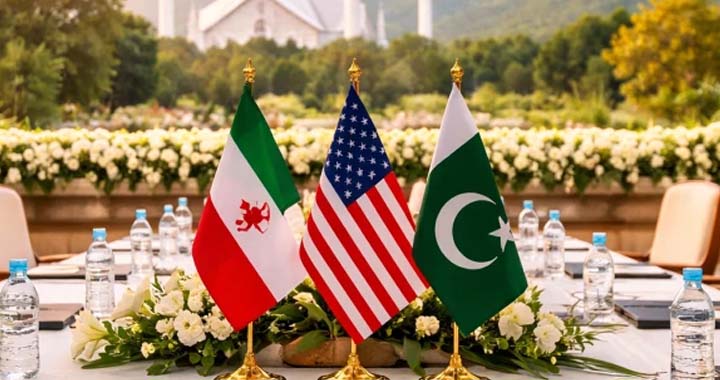
Islamabad has emerged as the focal point of high-level diplomacy as the United States and Iran engage in crucial peace negotiations aimed at easing tensions and converting a fragile ceasefire into a lasting agreement.
Senior delegations from both countries have arrived in Pakistan’s federal capital under tight security arrangements. The US delegation is led by Vice President JD Vance, while the Iranian side is headed by Parliament Speaker Mohammad Bagher Ghalibaf, with Foreign Minister Abbas Araghchi also playing a key role in the Talks .
Pakistan has formally welcomed both sides, positioning itself as a central mediator in one of the most sensitive geopolitical engagements in recent times. The Talks are expected to begin shortly, drawing intense international attention.
The diplomatic effort is being supported by key global and regional players, including China, Saudi Arabia, Türkiye, Qatar, and the United Kingdom, underscoring the broader international stake in the outcome.
A notable development ahead of the talks was the agreement on a two-week ceasefire, which has provided a window for dialogue. The ceasefire followed warnings from US President Donald Trump regarding possible military action amid escalating tensions, particularly concerning the strategic Strait of Hormuz and ongoing regional instability.
While the outcome of the Talks remains uncertain, Pakistan has already secured two significant achievements: facilitating the ceasefire and bringing both adversaries to the negotiating table.
According to informed sources, both sides have tabled their proposals, with Iran presenting a 10-point framework and the United States outlining a 15-point plan, reflecting the complexity of the issues under discussion.
In a national address, Prime Minister Muhammad Shehbaz Sharif highlighted Pakistan’s diplomatic role, stating that parties once engaged in conflict are now pursuing dialogue. He termed the upcoming phase of negotiations as “decisive” for achieving long-term regional peace.
Pakistan continues to play a proactive mediating role, aiming to bridge differences between the two sides. However, analysts caution that failure of the talks could have far-reaching implications for regional stability and global security.
The participation of senior leadership from both countries signals the seriousness of the process, with hopes that sustained engagement and political will may pave the way for a durable peace agreement.