By Riaz Hussain :
May 3, 2026 — World Press Freedom Day –
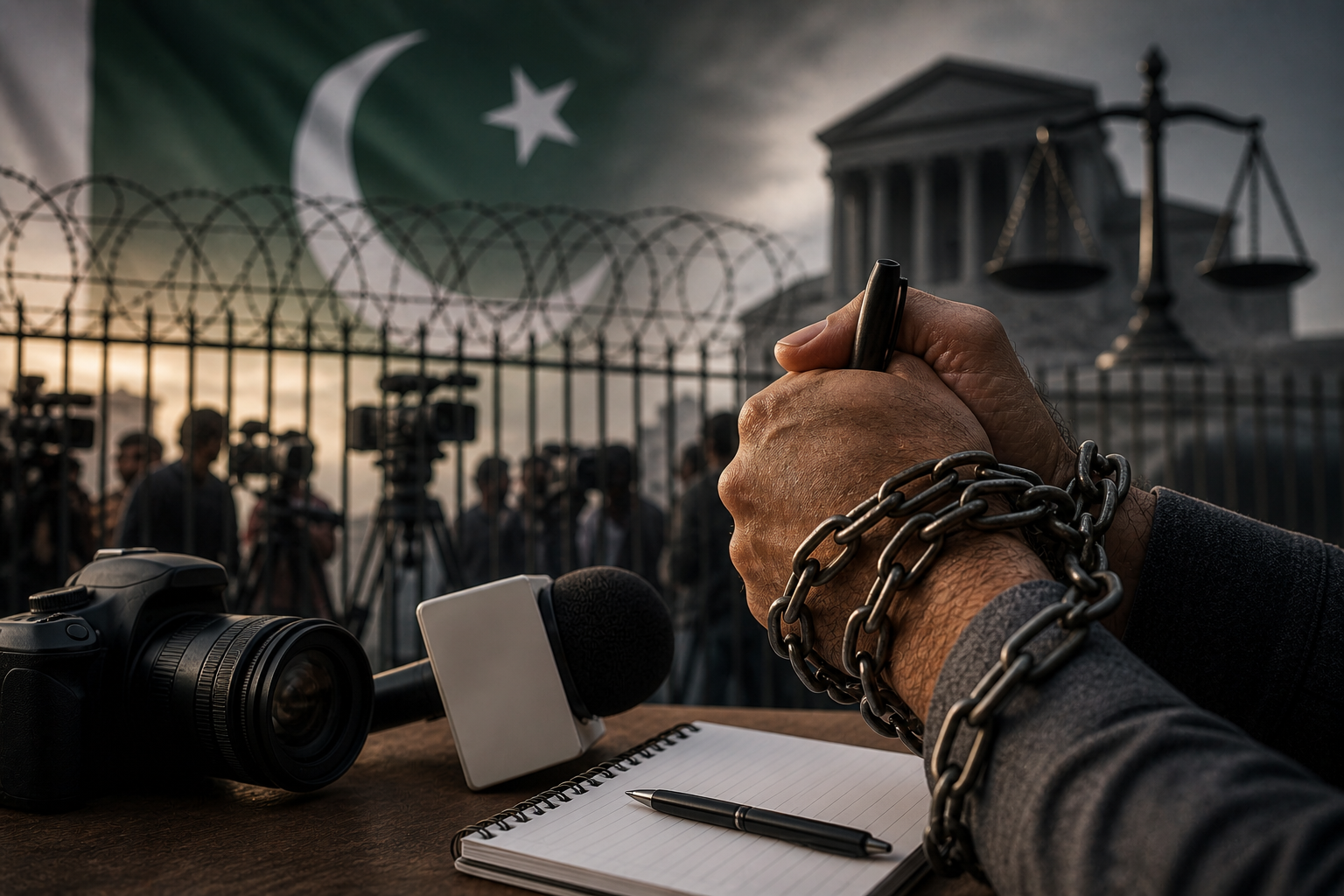
On the occasion of World Press Freedom Day, Pakistan’s leadership reaffirmed its commitment to protecting press freedom, even as concerns mount over increasing regulatory pressures, legal constraints, and rising threats to journalists across the country.
In separate messages, President Asif Ali Zardari and Prime Minister Shehbaz Sharif emphasized that a free and responsible media is essential for democratic stability, national unity, and global credibility. Referring to this year’s theme, “Shaping a Future at Peace,” the president underscored the importance of truth in building lasting peace, noting that Article 19 of the Constitution guarantees freedom of expression within reasonable limits.
Both leaders acknowledged that the media landscape is rapidly evolving, bringing new challenges such as misinformation, artificial intelligence-driven deepfakes, and the growing influence of global digital platforms. Prime Minister Sharif urged journalists to maintain high standards of accuracy and impartiality, stressing that in the era of instant news, balancing speed with credibility is more crucial than ever. He also commended the role of Pakistani media in promoting unity during recent regional tensions, particularly the 2025 conflict with India.
Regulatory Pressures and Legal Framework
Despite official assurances, press freedom in Pakistan continues to operate within a complex regulatory framework. The Pakistan Electronic Media Regulatory Authority (PEMRA) remains the primary body overseeing electronic media, with powers to issue licenses, enforce content regulations, and impose penalties including fines, suspensions, and license cancellations.
Recent years have seen increased scrutiny of PEMRA’s expanding authority, particularly regarding digital and broadcast content. Restrictions on coverage deemed “anti-state,” sensitive judicial matters, and politically charged discussions have raised concerns among journalist bodies and rights organizations about selective enforcement and growing self-censorship.
Temporary bans on television channels, warnings issued to anchorpersons, and restrictions during politically sensitive periods have further fueled debate over editorial independence. While critics view these measures as excessive, supporters argue they are necessary to counter hate speech, misinformation, and destabilizing propaganda.
The Prevention of Electronic Crimes Act (PECA) Amendment 2025 has added another layer of concern. The law grants authorities broad powers to regulate online content, remove material, and initiate legal action under provisions such as “fake news.” Journalists accused under the law may face heavy fines, imprisonment, and prolonged legal proceedings. Critics argue that these vague provisions risk being used to control the media and discourage dissent, contributing to an environment of fear and self-censorship.
Rising Threats to Journalists
Beyond regulatory challenges, journalists in Pakistan continue to face serious safety risks. According to the Pakistan Press Foundation (PPF), at least 233 incidents targeting journalists were reported between January 2025 and April 2026, including assaults, arrests, legal cases, detentions, and abductions.
Media professionals report increasing pressure not only from state institutions but also from political groups, non-state actors, and coordinated online harassment campaigns. Economic challenges have further compounded the situation, as declining advertising revenues and financial instability have led to layoffs and reduced operational independence within media organizations.
Digital harassment, particularly against female journalists, has emerged as a growing issue, often involving targeted trolling and disinformation on social media platforms.
Voices from Within the Media

Journalists themselves have voiced deep concern over the current environment. Multimedia journalist Wadan Khan warned that when media falls under the influence of powerful interests, it ceases to serve the public and instead advances the agenda of those in control. He added that in an atmosphere where only “positive reporting” is tolerated, journalists who pursue the truth risk their careers and personal safety.
Senior journalist Haq Nawaz Khan echoed similar concerns, stating that the PECA Act has effectively become a tool to control the media. He noted that media outlets are facing intense pressure, limiting their ability to practice independent journalism. He also highlighted the threat posed by non-state actors and expressed concern that divisions among media organizations have weakened their collective voice in defending press freedom.
A Global Perspective
While Pakistan faces its own challenges, concerns about press freedom are part of a broader global trend. Even in countries like the United States, often considered a benchmark for free speech, journalists have reported increasing polarization, declining trust in media, and difficulties while covering protests. The growing influence of technology platforms and the spread of misinformation have reshaped journalism worldwide.
The Road Ahead
As Pakistan marks World Press Freedom Day, the gap between constitutional guarantees and practical realities remains a pressing issue. While the government emphasizes responsible journalism and the need to combat misinformation, critics argue that excessive regulation and vaguely defined laws risk undermining media independence.
Observers suggest that improving press freedom will require meaningful legal reforms, stronger protections for journalists, institutional transparency, and greater unity within media organizations. At the same time, journalists must continue to uphold ethical standards to maintain public trust.
In an increasingly complex information environment, the future of press freedom in Pakistan will depend on achieving a careful balance between regulation, responsibility, and the fundamental right to report freely and hold power to account.