
Report by Riaz Hussain :
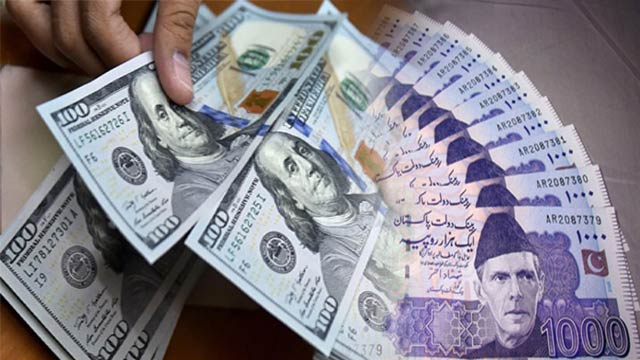
A few banks, informally referred to as “export banks,” dominate the inflow of export proceeds and are among the few institutions capable of arranging U.S. dollars. However, a persistent dollar shortage continues to widen the gap between the official exchange rate and the market-driven value.
According to the Exchange Association, importers are paying 2 to 3 rupees above the interbank rate, with some transactions occurring at Rs 285 per dollar, while the State Bank of Pakistan’s official rate stood around Rs 282 on Wednesday.
Zafar Paracha, a representative of the open market, dismissed fears of panic, attributing the increased demand to the ongoing Hajj season. He noted that buying dollars from the open market isn’t easy; buyers are required to submit documentation and satisfy scrutiny by investigative agencies. A customer can acquire up to $500 without much hassle, but transactions exceeding $1,000 tend to attract the attention of the Federal Investigation Agency (FIA).
Currency dealers report that the rupee remained stable last week due to a reduction in external payment pressure. Although rumors of a sharp rupee devaluation are circulating, there appears to be no fundamental reason supporting such concerns.
They added that the rupee has been gradually weakening against the dollar, while the greenback itself has depreciated globally — the dollar index has dropped by nearly 9%, indicating broader weakness against other major currencies.
Several currency traders consider the gradual devaluation of the rupee to be a pragmatic strategy aimed at managing external obligations. A sudden drop in the rupee’s value could prompt exporters to withhold proceeds in anticipation of better rates.
Senior banker Manzoor Ali stated that exporters are still selling their proceeds as usual, but a growing disparity in rates could lead them to delay transactions.
He also noted that an increase in remittances has helped stabilize the exchange rate, contributing to broader economic stability. Pakistan is expected to receive $38 billion in remittances in FY2025, with a target of $39 billion for FY2026.
Despite an increase in dollar inflows this fiscal year, importers continue to face challenges in accessing foreign currency, with market rates exceeding the official level.
Local media reports suggest that currently only 20 to 30 percent of importers are allowed to purchase dollars for trade payments, even though the State Bank of Pakistan maintains that there are no formal restrictions on imports.
According to official trade data released for May, imports declined by 8% month-on-month, while the trade deficit contracted by 23%.
Interbank currency dealers revealed that banks have been directed to arrange dollars for imports, a task that remains both difficult and constrained, with some banks struggling under the pressure.