Muhammad Younas
For years, bottled water has been sold in Khyber Pakhtunkhwa as a safer option for families worried about the quality of tap water and unreliable supply systems. Yet a recent campaign by the Khyber Pakhtunkhwa Food Authority (KPFA) has revealed that this trust may be misplaced. According to the authority’s official report, more than 40 percent of bottled water tested in the province failed to meet safety standards.
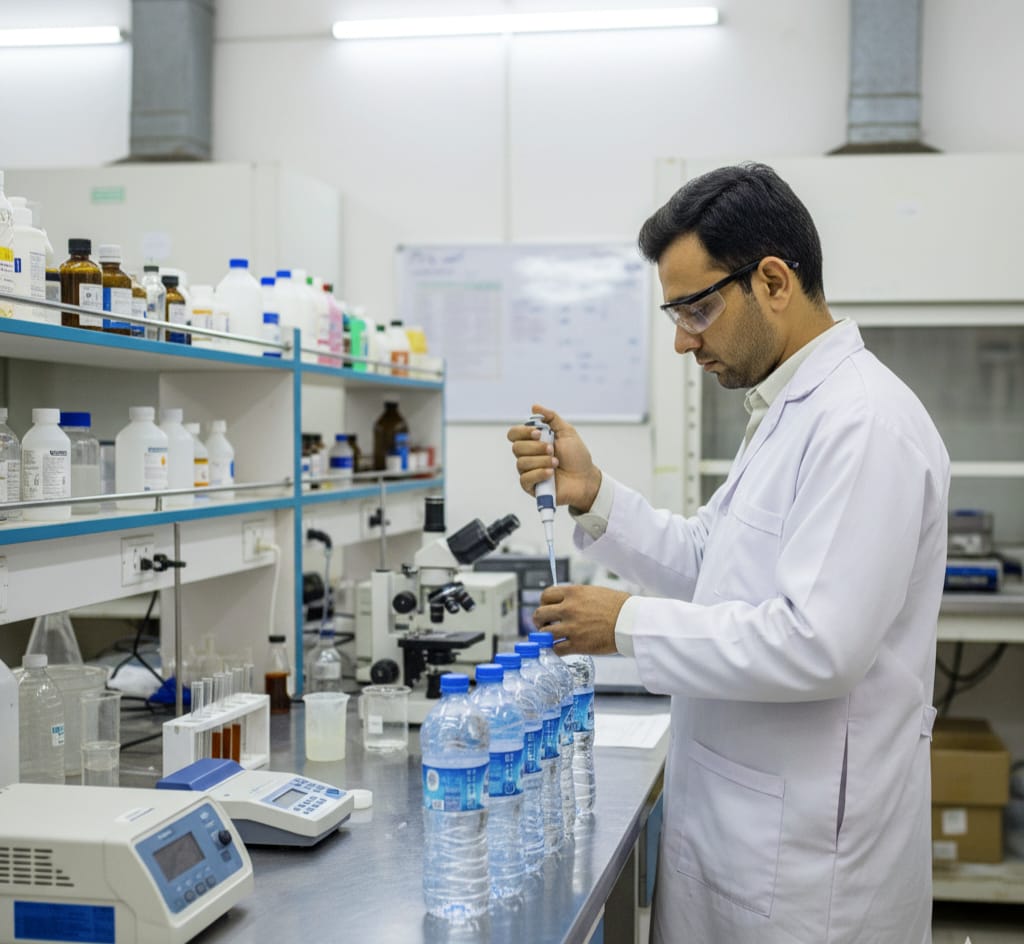
The month-long inspection and testing campaign, carried out between August and September, exposed alarming levels of contamination. The KPFA reported that 41 percent of bottled water samples collected from markets were unfit for consumption, containing dangerous microbial elements and, in some cases, unsafe chemical residues. The same campaign also tested water sources in different districts and found that 52 percent of raw sources were unsafe for human use. For many residents who turned to bottled water as a shield against unsafe tap supplies, the findings have raised both fear and anger.
Health specialists warn of the consequences. The World Health Organization (WHO) has long cautioned that waterborne diseases remain one of Pakistan’s gravest public health threats. WHO data shows that unsafe drinking water accounts for nearly 40 percent of hospital admissions in the country, contributing to child malnutrition, recurring diarrheal diseases, and long-term organ damage. Against this backdrop, the revelation that bottled water—the product marketed as the solution—may itself be hazardous is deeply troubling.
Community Voices
“It is very alarming, and the government and institutions must take action because our health matters,” said Qadir Khan, a resident of Khyber district. He explained that people are left with no real choice. “We buy bottled water because the tap water is not safe. But now we learn even bottled water may be dangerous. What should families like mine do?”
From Peshawar, Kamran Khan, who works in small business and industrial supply, pointed out that the legal framework already exists. “The laws exist, the institutions exist. If they are really sincere about people’s health, the authorities must ensure that all these laws are applied with clear operating procedures,” he said. He raised concerns about the plastic bottles themselves, noting that exposure to heat makes them unsafe for long storage. “Instead of punishing small industries only, the government should also help them improve. Clear policies and capacity-building are needed so that small producers can meet standards.”
Sadiq Khan, a broadcaster and events manager based in Peshawar, emphasized that the problem is not just weak enforcement but also misleading packaging. “Many factories producing bottled water lack proper laboratories. They don’t follow consistent procedures for adding minerals, yet they label their bottles with long lists of ingredients,” he explained. “In many cases, it is fake labeling. People should be cautious, check whether the brand is registered, and if in doubt, boil water before drinking.”
The Government’s Response
The Food Authority says it has already taken action. During the campaign, officials tested 156 samples of bottled water in various sizes. According to the report, 61 samples contained harmful bacteria, while two were found with chemical contamination. Heavy fines were issued to companies selling unsafe water, and their stocks were ordered off shelves.
Provincial Minister for Food Zahir Shah Toru stated that industries would not be allowed to resume production until they fixed their systems. “Our priority is public health. Companies that fail to ensure safe water will not be permitted to sell in the market,” he told reporters in Peshawar.
Despite these steps, consumer rights advocates argue that enforcement remains irregular. Bottled water that fails inspection is often found back in circulation weeks later. Without continuous monitoring, experts fear the unsafe cycle will repeat itself.
A Wider South Asian Problem
The concerns in Khyber Pakhtunkhwa reflect a wider challenge across the region. In India, repeated tests have uncovered unsafe bottled water being sold even in large cities. In Bangladesh, government investigations have revealed similar cases of contamination and mislabeling. Globally, the United Nations Environment Programme (UNEP) has warned that the bottled water industry, valued at more than $270 billion, often operates in developing countries with little oversight, despite being marketed as a safer alternative to public supplies.
In Pakistan, reliance on bottled water has grown rapidly as households lose confidence in municipal systems. Yet much of the bottled water industry is run by small- and medium-scale producers with limited technical capacity. Labels often promise international standards, but enforcement remains weak.
The Human Cost
The failure of regulation places the burden directly on families. Bottled water is far more expensive than tap water, and for low-income households, it already represents a significant sacrifice. Now, with trust shaken, families are caught between paying more for unsafe bottled water or taking their chances with untreated local supplies.
“People are losing trust in both the market and the institutions meant to protect them,” said Dr.Said Amin , a public health expert in Peshawar. “If consumers stop trusting bottled water, they may return to unsafe sources, which could make the health crisis worse. The government must act decisively to restore confidence.”
What Needs to Happen
Public health experts suggest that the issue requires a comprehensive response. Regular testing, stronger penalties, and investment in food and water laboratories are critical. But there is also a need for public education so that consumers can make informed decisions.
For residents like Qadir Khan, Kamran Khan, and Sadiq Khan, the expectations are simple. They want honesty, accountability, and a guarantee that what they drink will not make them sick. Their voices echo a global reality: without reliable access to safe water, societies struggle to protect both health and dignity.
As Qadir Khan summed it up, “We cannot live without water. But the least we expect is that what we drink will not harm us.”
Bottled Water Crisis in Khyber Pakhtunkhwa: A Question of Trust and Health