Muhammad Younas
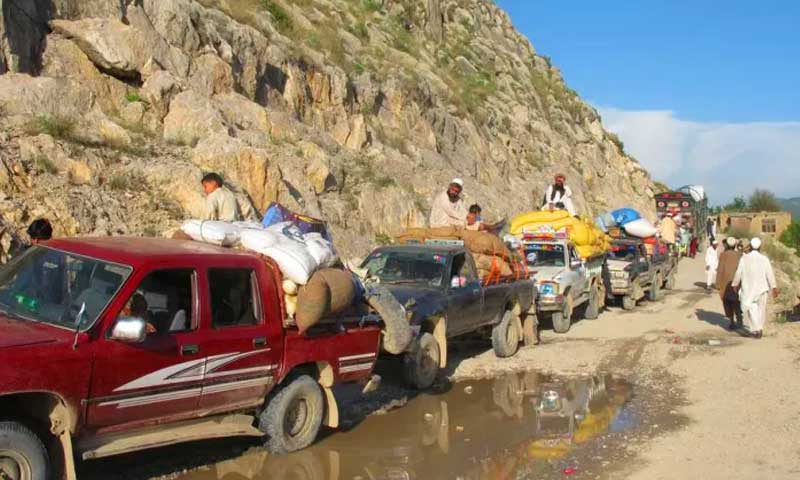
TIRAH VALLEY, KHYBER DISTRICT — For residents of Pakistan’s Tirah Valley, displacement has once again become a looming reality, reopening old wounds for families who only recently rebuilt their lives after years of conflict-driven upheaval. Official notices announcing the registration of families for what authorities describe as a “managed displacement” have spread quiet anxiety across villages, where memories of past evacuations remain painfully fresh.
Sixty-two-year-old Jan Alam, standing outside his modest home in Daras Jumat, watches neighbors prepare to leave—bundling clothes, gathering documents, and making contingency plans. Having already endured displacement once before, he says the emotional toll of starting over again is heavier than before. Across the valley, families are quietly withdrawing children from schools, delaying farming activities, and sending women and children to safer areas, unsure of what comes next.
The current situation follows several years of fragile calm, during which thousands of displaced families returned to Tirah after earlier military operations between 2013 and 2015. That return came without large-scale reconstruction, leaving communities to rebuild homes, livelihoods, and social networks largely on their own. The prospect of another displacement has intensified fears of deeper economic and social damage.
Local journalists report that registration has begun at designated sites, including the Paindi Cheena camp, with officials from the district administration and NADRA overseeing biometric verification. However, concerns are growing that strict documentation requirements—particularly the condition that national identity cards list Tirah Valley as a permanent address—could exclude many families who changed their addresses during previous displacements for work or administrative reasons.
Transportation arrangements have also caused confusion, with reports of delays and uncertainty around vehicle availability and token systems. For families already struggling, even minor logistical hurdles threaten to compound hardship. Authorities say relief measures will include food, basic medical aid, and transport assistance, along with cash reimbursement for families arranging their own travel.
Civil society groups and community elders have welcomed the visible presence of officials but stress that inclusivity, flexibility, and transparency are essential. They warn that rigid procedures risk excluding the elderly, the sick, and those living in remote areas—often the most vulnerable. Poor mobile and internet connectivity has further complicated communication, allowing rumors to spread faster than official information.
As winter deepens, concerns about health, shelter, and access to care have intensified, particularly for children and older residents. Despite the uncertainty, daily life continues in a fragile balance: shops remain open, fields are tended cautiously, and schools operate where possible. Yet bags are packed, documents kept close, and families wait anxiously for clarity.
For many in Tirah Valley, the fear is not movement itself, but the absence of stability. As one resident put it, the true test will not be how efficiently names are registered, but whether this latest displacement deepens a painful cycle—or finally leads to lasting peace and security.
Uprooted Once More: Tirah Valley Families Face Renewed Displacement Amid Uncertainty and Fear