Riaz Hussain :
Washington/Islamabad, August 2025 — Pakistan’s Army Chief, Field Marshal Asim Munir, has completed his second visit to the United States in just two months, signaling a renewed push to strengthen military, strategic, and economic cooperation between the two countries.
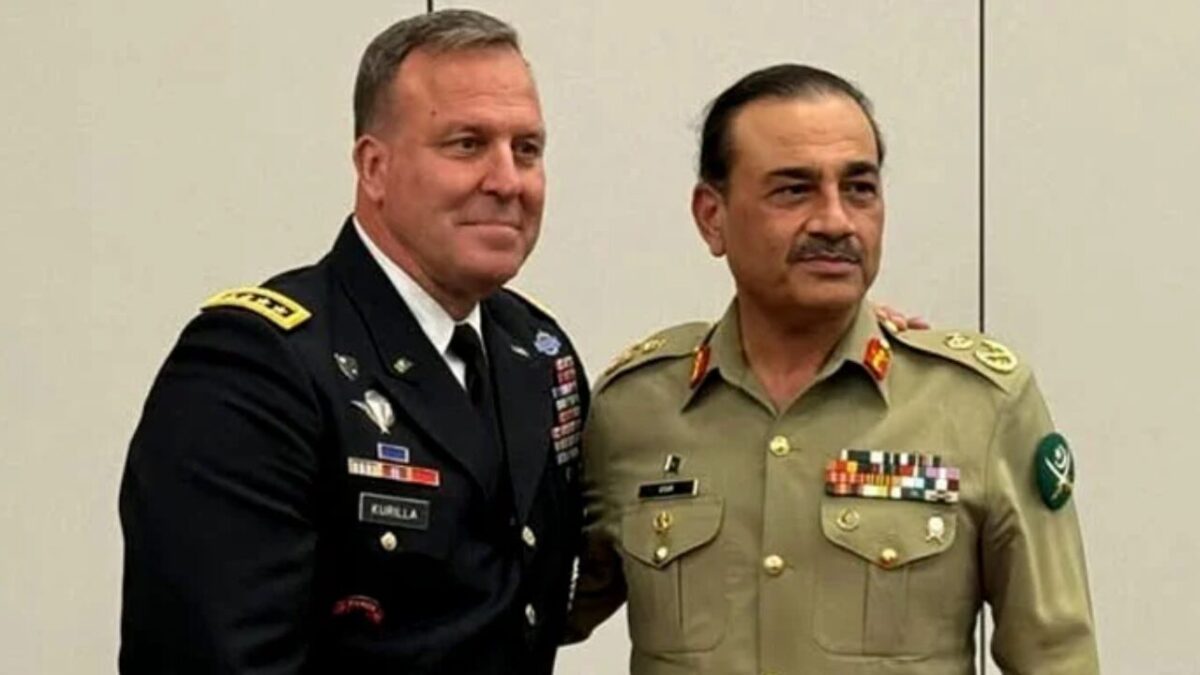
During the trip, Munir attended the change-of-command ceremony at U.S. Central Command (CENTCOM) in Florida, met the new CENTCOM chief Admiral Brad Cooper, and held talks with U.S. Joint Chiefs of Staff Chairman General Dan Caine. Discussions covered counterterrorism, military training, regional security, and trade opportunities.
The visit is part of what observers call a “warming trend” in Pakistan–U.S. relations, after years of strained ties over security and political concerns. U.S. officials described the military partnership as “strong” and “strategically important.”
Trade and Economic Context
Pakistan exports goods worth an estimated $4–5 billion annually to the U.S., making America one of its largest single-country markets. However, Islamabad has expressed concerns over the 19% import tax imposed by Washington on several Pakistani products, which it says limits competitiveness. Analysts suggest Munir’s visit also aimed at soft diplomacy to encourage a friendlier trade environment alongside security talks.
Diplomatic Friction
The trip, however, was not without controversy. In a private dinner with U.S.-based Pakistani community leaders, Munir reportedly made strong remarks, saying Pakistan was a nuclear nation and would respond forcefully if its security or water rights were threatened — even mentioning possible strikes against Indian-built dams on the Indus River.
India’s Ministry of External Affairs condemned the statements as “irresponsible nuclear sabre-rattling,” while the U.S. State Department said its relationships with both India and Pakistan remain unchanged. Pakistani officials, meanwhile, accused India of twisting Munir’s words.
Strategic Balancing Act
Analysts say the visit reflects Pakistan’s effort to improve ties with Washington while maintaining close defense cooperation with China. The strong rhetoric toward India, however, could heighten regional tensions at a time when both South Asian rivals are already at odds over water disputes and border security.
For Pakistan, the trip also served as outreach to the diaspora, with Munir calling overseas Pakistanis a “brain gain” and urging investment back home — part of a wider push to boost economic growth through foreign investment and exports.