By Riaz Hussain
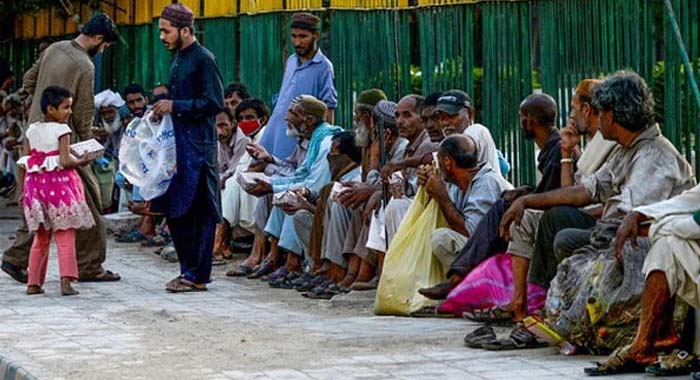
Pakistan: For 45-year-old Batoor Khan, finding work is a daily struggle, and building a family remains an unaffordable dream. Living with his sister, the daily-wage labourer earns less than Rs900 on days he finds employment, with no guarantee that work will be available the following day.
Some months, Khan manages to find work for around 20 days; in others, his employment is even more irregular. His meagre earnings barely cover his basic needs, leaving little room to save for the future or establish a household of his own.
Poverty, rather than personal choice, has kept him unmarried. The expenses associated with marriage and supporting a family remain beyond his financial means.
Khan’s story reflects the human cost of Pakistan’s persistent poverty crisis, where irregular employment, rising living expenses and limited economic opportunities continue to prevent vulnerable people from achieving financial security and fulfilling their personal aspirations.
The scale of deprivation is highlighted in the United Nations Development Programme’s (UNDP) 2026 statistical update, which estimates that 38.3 per cent of Pakistan’s population lives in multidimensional poverty, nearly twice the South Asian average of 19.3 per cent.
The corresponding reported rates are 16.4 per cent in India and 14.9 per cent in Bangladesh. However, the estimates are based on household surveys conducted in different years and do not represent strictly comparable conditions at the same point in time.
Unlike income-based poverty measures, the Multidimensional Poverty Index (MPI) assesses overlapping disadvantages in health, education and living standards. These include inadequate nutrition, poor child health, limited schooling, insufficient sanitation, lack of clean drinking water, electricity, adequate housing and essential household assets.
In Pakistan, the intensity of deprivation among people classified as multidimensionally poor stands at 51.7 per cent, while another 12.9 per cent of the population is considered vulnerable to multidimensional poverty.
The figures suggest that millions of people face several forms of deprivation simultaneously, leaving them particularly exposed to unemployment, illness, economic shocks and natural disasters.
Pakistan bears a heavy share of regional extreme poverty
The World Bank has also highlighted Pakistan’s poverty challenge, estimating that the country accounts for nearly half of the extremely poor population in the Middle East, North Africa and Afghanistan-Pakistan (Menaap) region.
In its Economic Outlook released ahead of the International Monetary Fund and World Bank annual meetings, the Washington-based lender projected Pakistan’s economic growth at 3.8 per cent and the fiscal deficit at 3.5 per cent for the current fiscal year, according to the report.
“Menaap is the only region in the world in which poverty remains above pre-pandemic levels and continues to rise. Pakistan accounts for nearly half of the region’s extreme poor,” the World Bank said.
The lender warned that a prolonged slowdown in tourism, construction and related services could reduce labour demand and weaken income flows to labour-sending economies, particularly Pakistan and parts of the Levant.
It projected Pakistan’s gross domestic product (GDP) growth to increase from 3.2 per cent in fiscal year 2024-25 to 3.7 per cent in FY2025-26 and 3.8 per cent in FY2026-27.
Services, manufacturing and livestock production were expected to remain relatively resilient despite higher import costs. However, rising commodity and transport costs could put additional pressure on inflation and external balances.
For workers like Khan, the broader economic outlook matters most when it translates into reliable employment and sufficient earnings. Without regular work, even modest financial goals can remain out of reach.
High costs and inconsistent policies undermine job creation
Economist Tahir Ameen said inconsistent economic policies, high interest rates, expensive energy and low investment were fuelling poverty and unemployment in Pakistan.
“Inconsistent economic policies, high interest rates, expensive energy and low investment are fueling poverty and unemployment in Pakistan,” Ameen said. “High production costs are weakening industrial competitiveness and limiting exports and job creation.”
He said climate change, natural disasters and rising global energy prices were adding to economic pressures. Weak education and inadequate skills development were also restricting human development and limiting opportunities for better-paying employment.
“Pakistan needs consistent, research-based policies to promote investment, industry and employment and improve education and healthcare,” he added.
Ameen’s assessment underscores the importance of ensuring that economic stabilisation leads to tangible improvements in household welfare. Controlling inflation and strengthening public finances are important, but sustainable poverty reduction also requires investment, productive industries, better employment opportunities and accessible public services.
Income poverty remains widespread
Separately, the World Bank estimated that 45 per cent of Pakistan’s population lived below its international poverty threshold of $4.20 per person per day in fiscal year 2024-25, down from 47.1 per cent a year earlier.
The estimate uses the international poverty line applicable to lower-middle-income countries and differs from Pakistan’s national poverty measure and the UNDP’s multidimensional poverty rate. Each indicator measures a different aspect of deprivation.
Economic shocks, inflation, climate-related disasters and limited livelihood opportunities continue to complicate efforts to reduce poverty.
Households dependent on irregular wages are particularly vulnerable because they often have little financial protection against illness, unemployment or unexpected expenses. A short period without work can quickly threaten their ability to meet essential needs.
Poverty threatens more than livelihoods
The UNDP’s latest update estimates that approximately 1.2 billion people across 108 developing countries experience acute multidimensional poverty. Children account for more than half of those affected.
South Asia accounts for a substantial share of global deprivation, particularly in nutrition, housing and education. Millions of school-age children across the region also live in households where at least one child is not attending school.
In Pakistan, reducing poverty requires sustained efforts to improve access to quality education, healthcare, clean drinking water, sanitation and adequate housing, alongside policies that encourage investment and create employment.
Expanding social protection and improving skills development could also help vulnerable households withstand economic shocks and secure more stable livelihoods.
For Khan, however, these policy debates offer little immediate relief from the uncertainty of daily-wage employment. At 45, he continues to depend on work that may or may not be available, with earnings insufficient to support the future he hopes to build.
His experience illustrates how poverty can reach beyond material deprivation, restricting personal choices, delaying family life and undermining a person’s sense of security.
Behind Pakistan’s poverty statistics are millions of individual struggles. For people like Khan, meaningful economic progress will come not simply through improved growth figures, but when decent work and a dependable income make a life of dignity, security and hope possible.