Muhammad Younas
Khyber: CBN
Pakistan’s Cannabis Moment: A Delicate Balancing Act
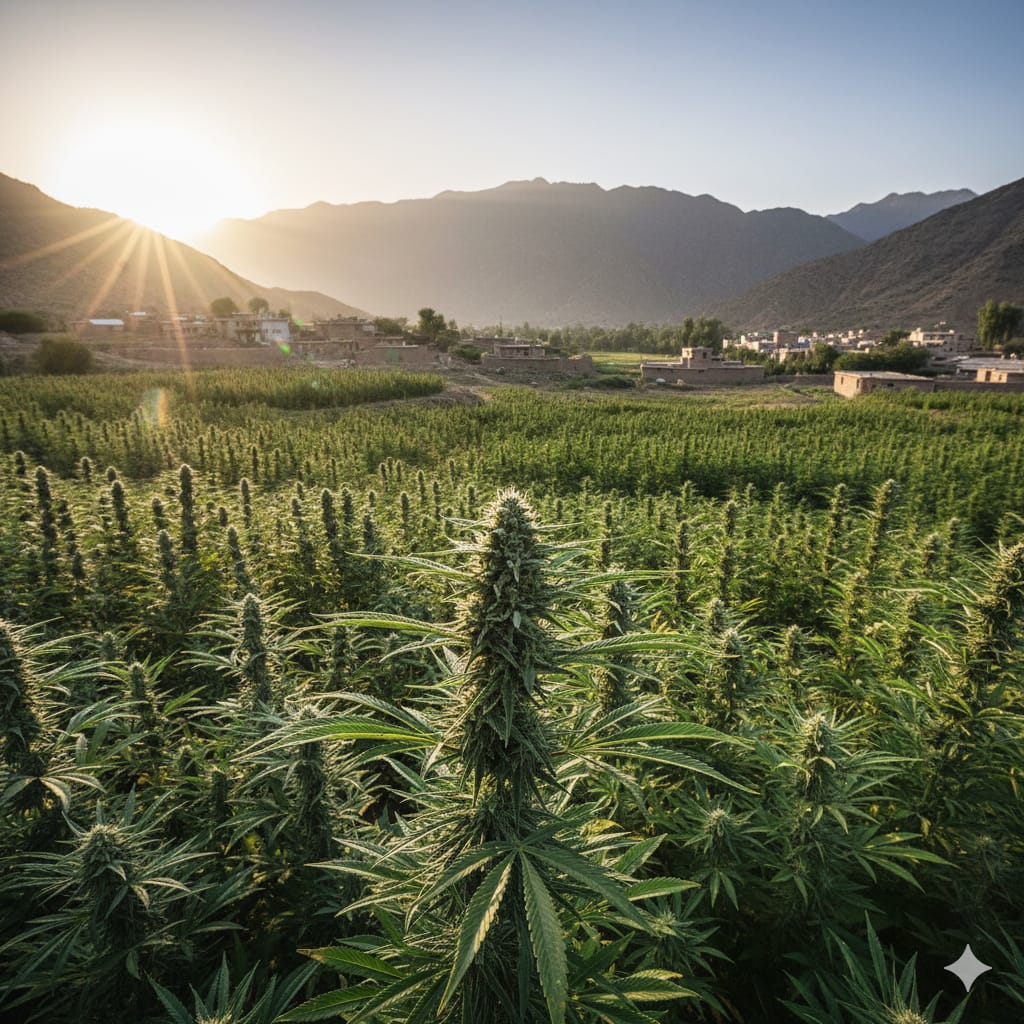
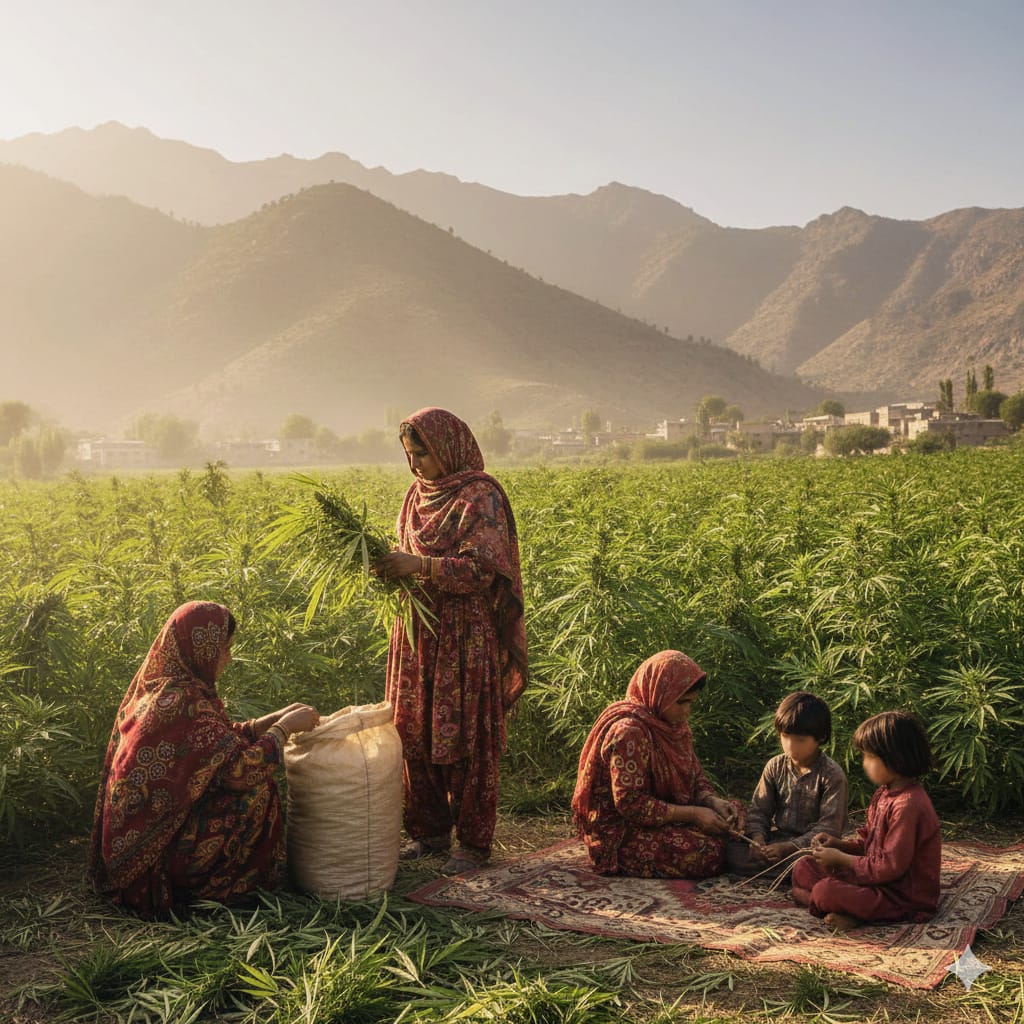
For generations, cannabis has grown quietly in Pakistan’s tribal belt. It was never just a crop — it was survival. Families relied on it to buy food, pay dowries, and send children to school. Yet its farmers lived under constant fear of raids and arrests, caught between tradition and the law.
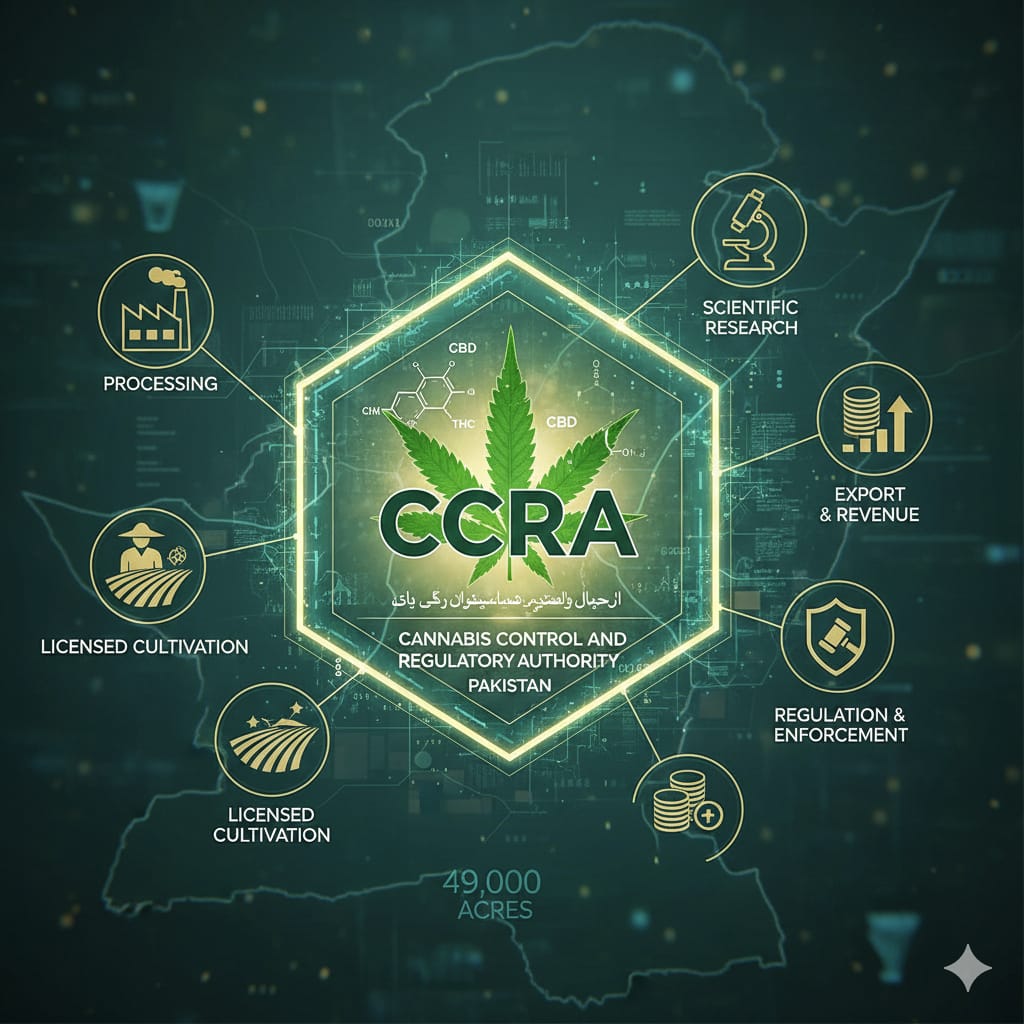
In February 2024, that long-standing grey zone shifted. The federal government approved a landmark ordinance establishing the Cannabis Control and Regulatory Authority (CCRA). This new body is tasked with regulating cultivation, processing, and sales of cannabis — but strictly for medical, scientific, and industrial purposes. The step aligns Pakistan with UN conventions that require state oversight of narcotics-related crops.
But passing a law is only the first step. The real challenge lies ahead: Can Pakistan turn a once-illicit trade into a legal, transparent industry — one that uplifts poor farmers, attracts foreign investment, and prevents abuse? Or will bureaucratic bottlenecks, falling global prices, and lingering stigma keep the “green gold” dream out of reach?
A Long-Awaited Step Toward Regulation
“This is not about promoting drug culture,” said Dr. Syed Hussain Abidi, Chairman of the Pakistan Council of Scientific & Industrial Research (PCSIR) and a member of the CCRA board, in an interview with Al Jazeera. “It is about creating a transparent system that benefits farmers, ensures safe products, and generates revenue for the country.”
Under the new policy, farmers will be able to apply for five-year cultivation licenses. Quality standards will be enforced, and THC — the compound that causes intoxication — will be capped at 0.3%, in line with global benchmarks. Violations will carry heavy fines ranging from PKR 10 million to PKR 200 million, with the Anti-Narcotics Force responsible for enforcement.
A Race Against the Global Market
Pakistan’s policy shift comes at a time when the international CBD market is booming. Valued at $7 billion in 2022, it is projected to exceed $30 billion by 2027.
But critics argue that Pakistan is late to the party. Former science and technology minister Fawad Chaudhry, who first pushed for cannabis reform in 2020, expressed frustration over the delay. “We had a first-mover advantage,” he told Al Jazeera. “Instead, we lost four years. Now we must compete with countries that already have export networks and research capacity.”
Nations like Germany, Canada, Thailand, and Colombia have invested heavily in cultivation and processing facilities. By the time Pakistan fully enters the market, prices may already be on the decline — leaving less room for profit.
Mapping the Cannabis Belt
Cannabis cultivation in Pakistan is concentrated in Khyber, Orakzai, and Kurram districts, covering about 49,000 acres. According to a University of Peshawar survey (2021), these areas produce up to five million kilograms of hashish annually.
The study recommended setting up six CBD oil extraction plants, which could create 6,000 direct jobs and generate up to $1.5 billion annually in export revenue. On the global market, CBD oil is often referred to as “green gold” — fetching between $6,000 and $10,000 per liter.
Farmers’ Hopes and Fears
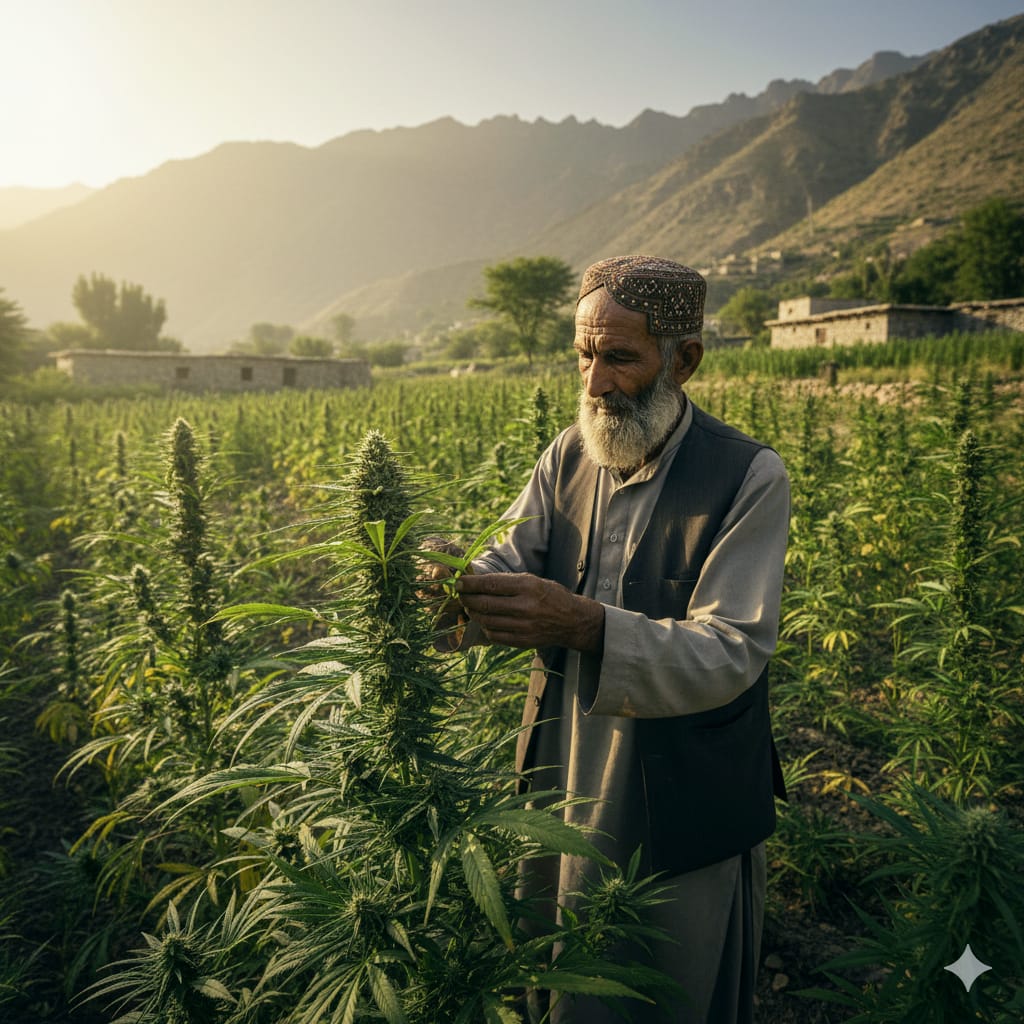
For farmers like Naeem Khan, legalization brings cautious optimism. “This is our bread and butter,” he said. “But we’ve grown in fear all our lives. If this change really comes, maybe my children will grow up as legal farmers, not outlaws.”
Not everyone is reassured. Smallholders worry that legalization will benefit big corporations more than local families. “We fear that big investors will come, get the licenses, and push us out,” said Alam Khan, a farmer from Orakzai, in a BBC Urdu interview.
Women see an opportunity for empowerment. “If we can sell legally, we can send our daughters to school,” said Gul Meena, the wife of a farmer, in conversations with development workers.
Faith and Ethics: Building Public Trust
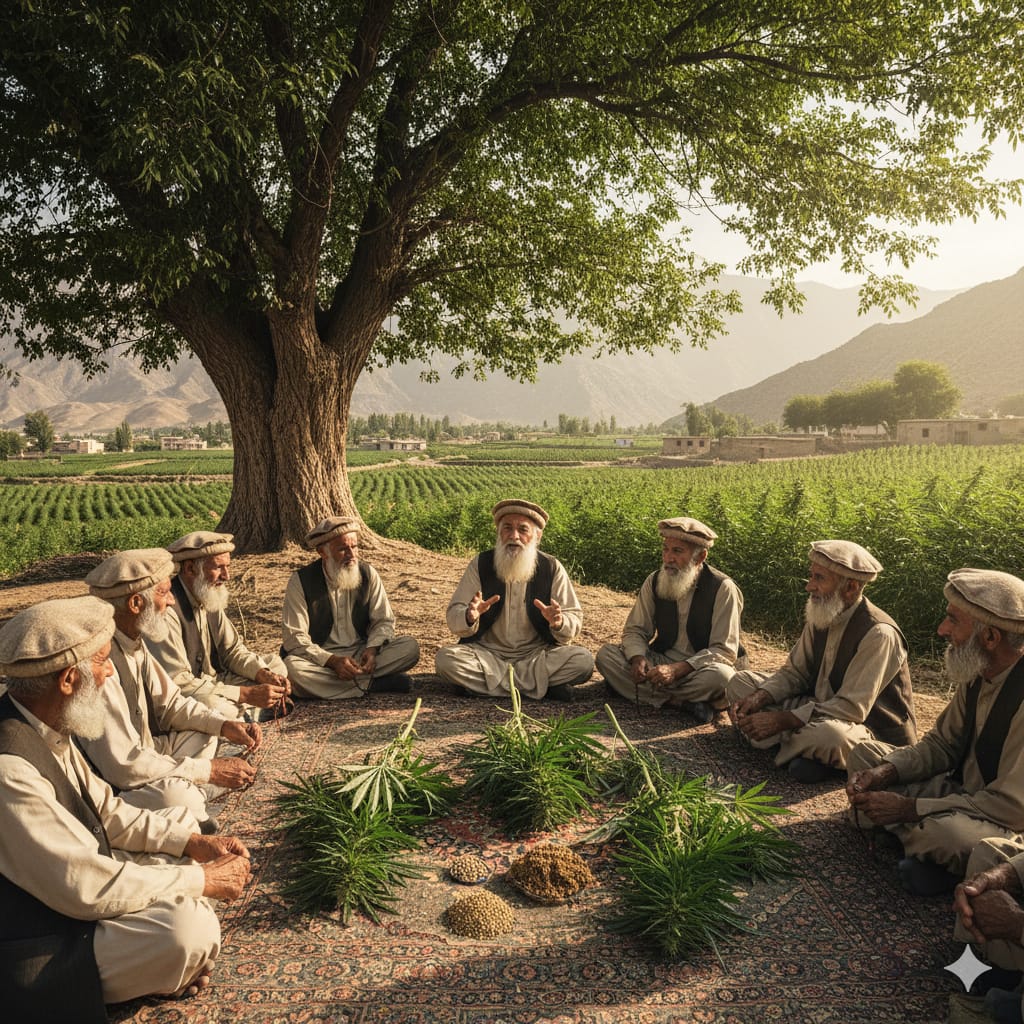
Because religion plays such a central role in Pakistan’s public life, the debate on cannabis legalization is also being examined through a moral lens. Islamic scholars and clerics are increasingly weighing in.
Islamic Q&A sources explain that CBD oil with little or no THC may be permissible if prescribed by a doctor and used for genuine medical needs. In 2023, Shaykh Arshad Ali wrote that intoxicants are forbidden under Islamic law, but may be permitted when no lawful alternative exists for treatment.
Local voices are also entering the conversation. Speaking on FM 92.2 Radio Khyber in May 2025, Maulana Rahimullah, a cleric from Bara, stated that cannabis could be allowed for medicine as long as it does not intoxicate, adding that the state must ensure it is not misused.
Public opinion appears to be shifting. A 2024 survey by regional universities found that most residents in Khyber, Orakzai, and Kurram support legalization — provided it leads to jobs, better infrastructure, and local investment. Elders and religious leaders stress that transparency and community participation will be key to building public trust.
Infrastructure, Investment, and Delays
Despite progress on paper, implementation has been slow. “We have earmarked 1,000 acres for a Khyber Economic Corridor that will host hemp-processing factories, logistics terminals, and export hubs,” said Javed Iqbal Khattak, CEO of the KP Economic Zones Company. “But we cannot proceed until the final policy rules are approved.”
The Road Ahead
Cannabis legalization in Pakistan is more than an economic reform — it is a social experiment. If successful, it could convert a thriving black market into a formal, tax-paying industry that funds schools, hospitals, and livelihoods in historically neglected areas.
But the clock is ticking. With global competition rising and prices falling, Pakistan must act quickly to secure its share of the market.
Back in Tirah Valley, Naeem Khan sums up the hope and urgency felt by many:
“We have lived with risk all our lives. Now we just want a fair chance to grow, sell, and live without fear.”