Taimoor Khan
Civilian gun ownership is rapidly increasing in Khyber Pakhtunkhwa, with experts linking the trend to rising insecurity, fear of violence, deep-rooted social traditions, and the state’s growing reliance on arms licensing as a source of revenue.
Official data show that between January 2024 and March 2026, more than 400,000 people applied for arms licences across the province. Authorities approved over 314,000 applications, while more than 277,000 licences have already been issued, generating over Rs3 billion in government revenue.
According to 72-year-old Farmanullah, a resident of Hazarkhwani near Peshawar, carrying weapons in the past was considered a symbol of prestige, authority, and influence, particularly during jirgas, weddings, funerals, and tribal dispute settlements.
“After 2000, education, stricter policing, and public awareness reduced the open display of weapons, but the culture now appears to be returning,” he says.
Figures from the provincial Home and Tribal Affairs Department show that Peshawar recorded the highest number of fresh arms licences, followed by Swat, Mardan, Swabi, Charsadda, Bannu, and Dera Ismail Khan. Pistol licences accounted for the overwhelming majority of approvals, generating more than Rs2 billion in revenue alone.
Security experts and criminologists warn that the rapid expansion of civilian firearm ownership is contributing to the growth of an increasingly unregulated weapons market. University of Peshawar criminology expert Dr Muhammad Ibrar says firearms are commonly acquired for self-protection, family feuds, terrorism-related fears, and personal disputes, while also serving as symbols of social status and power.
He cautions that the normalisation of weapons increases the likelihood of firearms being used in road rage incidents, domestic violence, and everyday conflicts.
Concerns have also emerged over weak regulatory oversight. Officials acknowledge that while imported weapons can often be traced through serial numbers and dealer records, locally manufactured firearms largely remain outside any standardised tracking system.
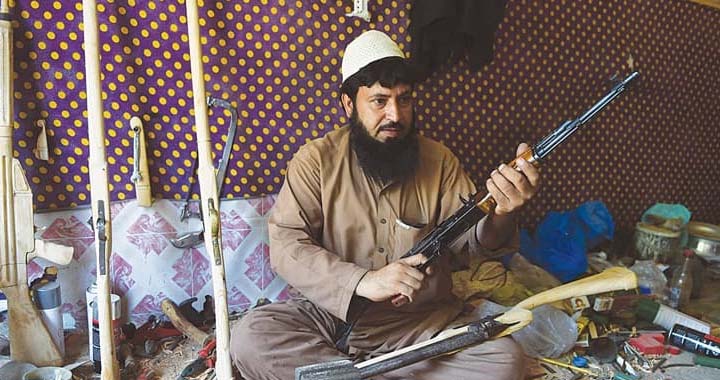
An arms dealer from Darra Adam Khel, one of the region’s largest informal arms manufacturing hubs, says locally made weapons are routinely transported in bulk to Punjab and Sindh for resale.
Meanwhile, crime statistics indicate a worsening security situation across the province. Data from the Pakistan Bureau of Statistics show murders in the province increased from 2,384 cases in 2020 to 3,109 in 2024, while kidnapping cases also rose significantly during the same period. Authorities additionally recorded hundreds of militant attacks in 2024.
Mental health and counter-extremism experts argue that the expansion of gun ownership reflects declining public trust in the state’s ability to provide security. Psychiatrist Dr Asif Gandapur of Hayatabad Medical Complex says firearms have long been embedded in local culture, though wider availability may contribute to higher levels of violence and social tension.
Despite criticism, officials from the provincial Home and Tribal Affairs Department defend the licensing system, arguing that obtaining an arms licence is a legal right and that applicants undergo biometric verification, police background checks, and multiple stages of scrutiny before approval.
Authorities say the licensing process has now been digitised, helping law-enforcement agencies verify licences online and reducing fraud.
Critics, however, argue that while the state struggles to maintain law and order, it is simultaneously legalising and expanding the presence of firearms in society — raising broader questions about public safety, state authority, and the growing militarisation of civilian life.