

Fazal Aziz Bunairee
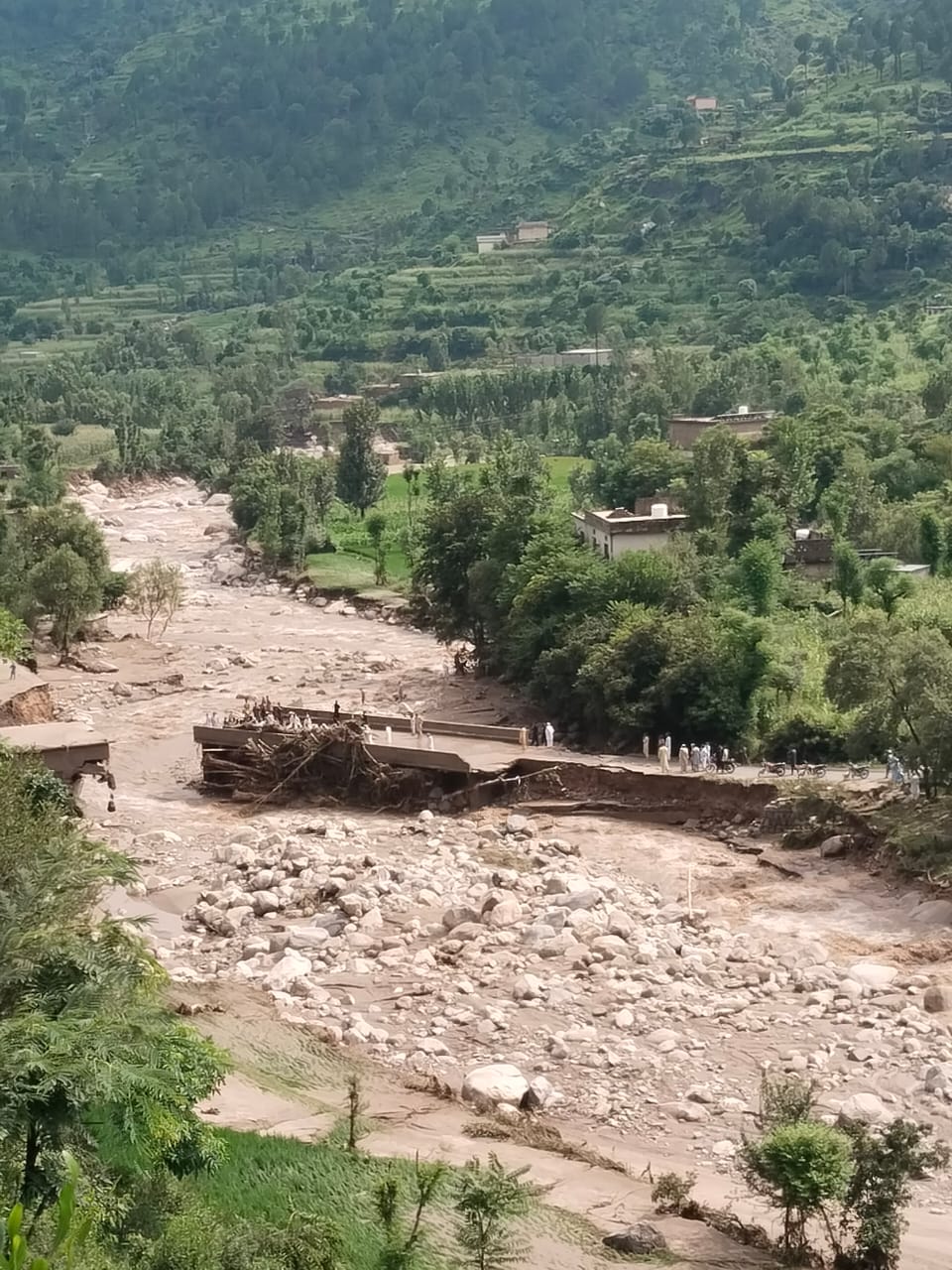
A cloudburst is not a new phenomenon—but in Pakistan’s north, it has brought new tragedy. Torrential rains and sudden flash floods have battered Khyber Pakhtunkhwa (KP), Gilgit-Baltistan (GB), and Azad Jammu & Kashmir (AJK), leaving hundreds dead and thousands displaced.
Experts stress that a cloudburst is simply an unusually heavy downpour in a short span, not exploding skies. “When three to four inches of rain fall in under an hour, meteorologists call it a cloudburst,” explained Riaz Muhammad, former DG of the Pakistan Meteorological Department. “It is an old term, but media and social media have made it more common.”
According to the Provincial Disaster Management Authority (PDMA), since August 15, floods triggered by cloudbursts have killed 406 people in KP alone and injured 247. The dead include 305 men, 55 women, and 46 children. Buner district suffered the heaviest toll, with 237 deaths and nearly 900 homes damaged. Similar destruction was reported in Shangla, Swat, Bajaur, Mansehra, and Swabi, while GB and AJK faced heavy rains, landslides, and crop losses.
Environmentalists warn that human activity has magnified the disaster. Deforestation, reckless mountain-cutting, and housing on riverbeds have left communities dangerously exposed. “In Europe or the US, floods also cause property loss, but rarely mass casualties because planning and preparedness are stronger. Here, poor management turns natural hazards into human tragedies,” Riaz noted.
With climate change intensifying extreme weather, experts say the lesson is clear: cloudbursts may be predictable, but their destruction is not inevitable—better planning could save lives.
At a Glance: Pakistan North Flood Toll (Aug 15–24)
• 406 deaths in KP, dozens more in GB & AJK
• 247 injured in KP
• Buner worst hit: 237 deaths, 886 homes damaged
• Major losses: Swabi (42), Shangla (36), Mansehra (25), Bajaur (22), Swat (20)
What is a Cloudburst?
• An old meteorological term for extreme rainfall, not “clouds bursting”
• Typically, 100 mm+ rain in one hour over a small area
• Common in mountainous regions
• Now more damaging due to climate change, deforestation, and fragile settlements