
Riaz Hussain :
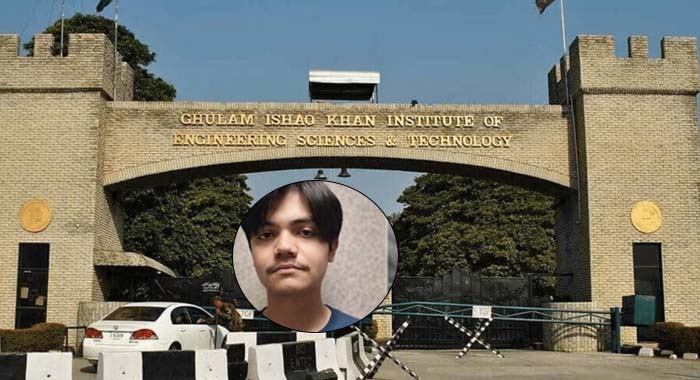
March 8, 2026, began as a morning of unimaginable sorrow—one that shattered my world forever. When the Dean of Ghulam Ishaq Khan Institute informed me of my son Roslan Riaz’s alleged suicide, it felt as though the ground slipped beneath my feet. I collapsed, unable to process the devastating news. My heart and mind refused to accept such a painful reality.
We immediately informed his uncle, and without wasting a moment, I, my elder son, and his uncle Hidayat Khan rushed to the university. On the way, we received another call from the administration claiming that Roslan had been in an accident and was injured. Clinging to hope, we prayed continuously to Allah to save his life. But when we reached the university and were directed to the medical center, our worst fears came true—my beloved son lay lifeless, covered with a white sheet.
The university staff tried to console us, but no words could ease the pain or answer the questions in my heart. How could a young man like Roslan—ambitious, intelligent, and full of dreams—take his own life?
What followed only deepened our confusion. First, we were told it was an accident. Then, that he had fallen. Later, the claim changed to suicide. These contradictory statements raised serious doubts and intensified our grief. While I do not accuse the institution of ill intent, my heart cannot accept that such a bright and determined young man could end his life in this way.
Roslan was not just my son—he was a source of guidance for his brothers and a pillar of responsibility within our family. He would share his thoughts openly, often speaking about serving humanity and transforming the world into a welfare state. Even when told that such dreams were difficult, he would respond with unwavering determination: “I will bring this change.”
A 19-year-old with such vision, who had already achieved a CGPA of 3.5 in his first semester and was preparing for the next—how could he choose to end his life? A young man who dreamed of reaching institutions like Google, Apple, and Harvard University—why would he take such a step? This is a question that refuses to leave my heart.
Serious concerns also surround the circumstances of his death. In such incidents, families are usually awaited before any handling of the body or personal space. Yet, in our case, my son’s body was handed over in the medical center, and his room had already been locked. When we later entered his room, the conditions did not support the claim of suicide. The setting did not make such an act seem possible, and even the cloth allegedly used bore no visible marks.
I have placed my trust in the university administration, the police, and district authorities to conduct a transparent and fair investigation. The university had assured that a report would be provided within a week, yet no contact has been made with us so far. We have received neither the post-mortem report nor any laboratory findings that could clarify the true cause of Roslan’s death.
Today, I raise my voice not only as a grieving father but as a citizen seeking justice. I appeal to human rights organizations—both national and international—to take notice of this tragedy and help uncover the truth. The loss of a young life within a reputed institution cannot be ignored.
I also urge the relevant authorities, including the provincial leadership, judiciary, and police, to ensure a transparent investigation. My only hope now is that the truth comes to light and that justice is served.
Roslan Riaz was more than just a student—he was a dreamer, a believer in humanity, and a young soul full of purpose. His voice may be silent today, but as his father, I will continue to seek answers.
Because a life like his deserves the truth.