
Reuters :
Israel started pre-emptive strikes against Iran on Saturday, sharply escalating tensions in the Middle East and casting doubt on ongoing diplomatic efforts over Tehran’s nuclear programme.
Israeli Defense Minister Israel Katz said the operation aimed to “remove threats to the State of Israel.” Meanwhile, The New York Times, citing a U.S. official, reported that American strikes targeting Iran were also underway.
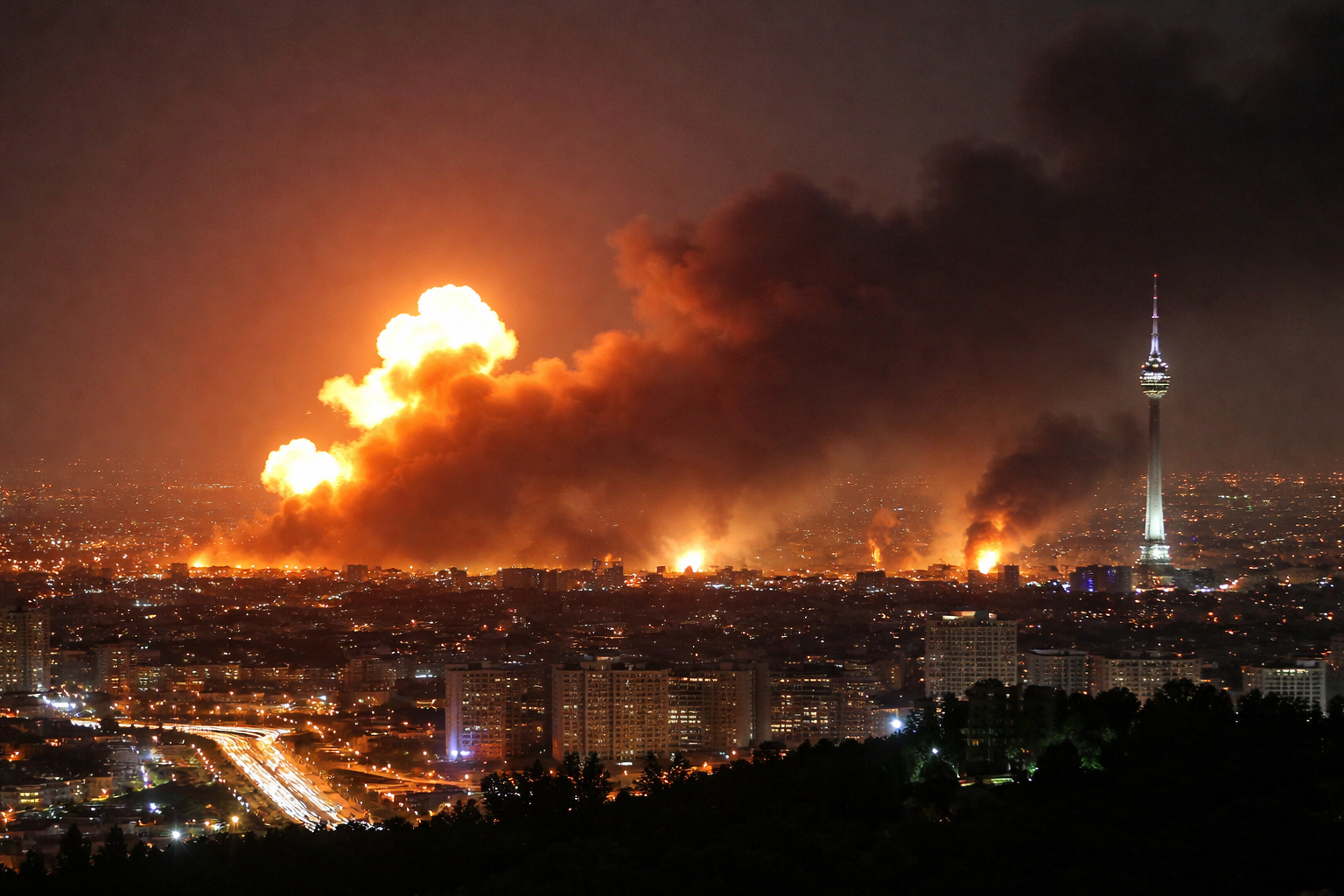
A source told Reuters that Iran’s Supreme Leader, Ayatollah Ali Khamenei, had been moved from Tehran to a secure location. Iran’s Fars news agency reported explosions in several cities, including Isfahan, Qom, Karaj and Kermanshah. Iranian media also said blasts were heard in Tehran.
The latest strike follows a 12-day air war between Israel and Iran in June and comes after repeated warnings from both Israel and the United States that further military action would follow if Iran continued advancing its nuclear and ballistic missile programmes.
An Israeli defence official said the operation had been planned for months in coordination with Washington, with the timing finalized weeks ago. Shortly after reports of explosions in Iran, air-raid sirens sounded across Israel at around 8:15 a.m. local time. The Israeli military described the alert as a precaution against potential incoming missile attacks.
Authorities in Israel ordered schools and most workplaces closed, except for essential services, and shut the country’s airspace to civilian flights. The airports authority urged the public not to travel to any airports.
The renewed confrontation comes despite diplomatic efforts earlier this year. The United States and Iran resumed negotiations in February aimed at resolving their long-running dispute over Tehran’s nuclear ambitions and easing regional tensions.
Israel has maintained that any agreement must go beyond limiting uranium enrichment and should include dismantling Iran’s nuclear infrastructure. It has also pushed for restrictions on Iran’s missile programme to be included in talks.
Tehran has signaled willingness to accept limits on its nuclear activities in exchange for sanctions relief but has rejected linking the issue to its missile programme. Iranian officials have repeatedly stated that the country would defend itself against any attack and warned neighboring states hosting U.S. forces that American bases could be targeted in retaliation.
In June, the United States joined Israeli strikes on Iranian nuclear facilities in what marked the most direct American military action against Iran to date. Iran responded by firing missiles toward the U.S. Al Udeid air base in Qatar, the largest American military installation in the Middle East.
Western governments argue that Iran’s ballistic missile programme threatens regional security and could potentially be used to deliver nuclear weapons. Iran denies seeking to develop atomic bombs.