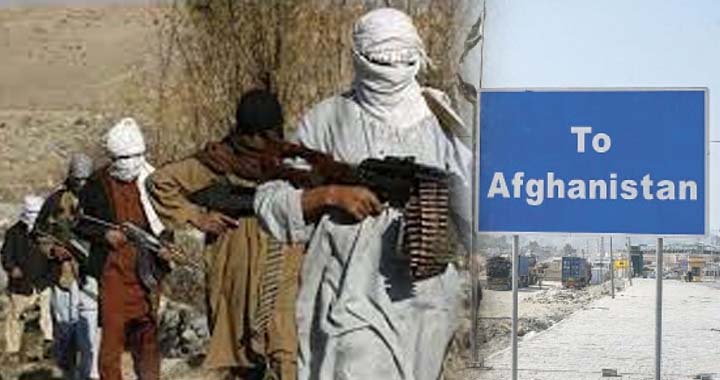
Just days after Pakistan warned Kabul to “choose between Islamabad and the banned Tehreek-e-Taliban Pakistan (TTP),” a senior American diplomat has advised Islamabad to adopt a political approach instead of relying solely on force.
Zalmay Khalilzad, former US Special Representative for Afghanistan under President Donald Trump, said Pakistan should prioritize dialogue with the Afghan Taliban. “The military option is a mistake. Pakistan should adopt a political strategy and engage in talks,” he wrote on social media after returning from Kabul, where he met senior Taliban officials alongside Adam Boehler, the US Special Envoy for Hostage Affairs.
Khalilzad noted that recent clashes between Pakistani security forces and TTP militants had claimed both civilian and military lives, stressing that political engagement was the only way to break the cycle of violence. “Before 2021, Pakistan urged the US and Afghan government to negotiate with the Taliban. Now it is Pakistan’s turn to consider the same approach,” he added.
Former Prime Minister Imran Khan echoed Khalilzad’s remarks, insisting that peace in Khyber Pakhtunkhwa—where his party governs—cannot be achieved through military operations alone. “This approach will never bring peace. It will only intensify terrorism,” Khan said. He urged the government to send a peace delegation to Afghanistan and called on allies, including Pashtoon nationalist leader Mahmood Khan Achakzai, to support the initiative.
Earlier this week, Prime Minister Shehbaz Sharif and Army Chief Gen. Asim Munir issued a stern warning to Kabul from Bannu: “Choose between Pakistan and TTP.”
The US has previously commended Pakistan’s counterterrorism cooperation, particularly when Islamabad captured an ISIS-K operative linked to the Kabul airport bombing. However, Khalilzad’s latest statement marks one of Washington’s clearest calls for Pakistan and the Afghan Taliban to sit at the negotiating table.
Analysis
Khalilzad’s remarks underscore a striking reversal. For years, Pakistan pressed the US and Kabul to negotiate with the Afghan Taliban; now Washington is urging Islamabad to consider talks of its own. His alignment with Imran Khan’s position also carries political undertones, given his past criticism of Pakistan’s security establishment and sympathy for Khan.
The debate reflects Pakistan’s deepening dilemma. Military operations have brought tactical gains but no strategic breakthrough, while public frustration over ongoing violence in Khyber Pakhtunkhwa continues to grow. Islamabad is pressuring Kabul to act against the TTP, but Khalilzad’s message suggests Washington sees dialogue—not confrontation—as the more sustainable path.
Regionally, the stakes remain high. Afghanistan’s Taliban government is balancing tense ties with Pakistan while seeking recognition from China, Russia, and Iran. A harsher military stance by Islamabad could push Kabul closer to these neighbors, weakening Pakistan’s influence. Meanwhile, Washington’s call for dialogue may clash with Beijing’s preference for a security-first approach along the Belt and Road corridor.
For the US, promoting talks is a low-cost strategy to prevent further instability in South and Central Asia. For Pakistan, however, the choice is far more complex: negotiate with a hostile militant group and risk political backlash, or continue military operations that have yet to deliver lasting peace.
Ultimately, Pakistan faces the same hard choice it once prescribed to others: talk to the enemy, or prepare for an endless fight.