By Muhammad Younas and Islam Gul
BARA, Khyber District, — Twice uprooted by conflict, tens of thousands of children from Pakistan’s Tirah Valley are now facing a growing health crisis in displacement, battling measles, malaria, skin infections and gastrointestinal illnesses as an overstretched health system struggles to cope.
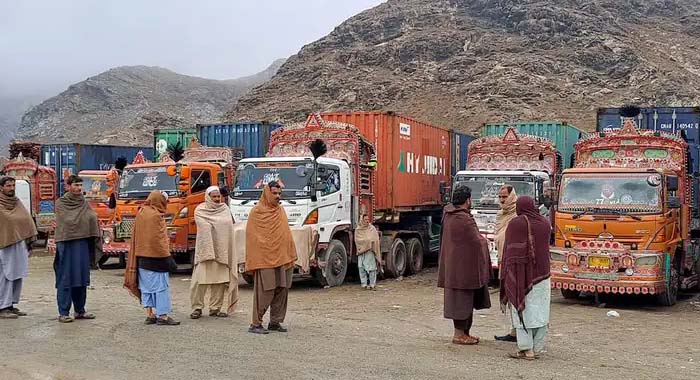
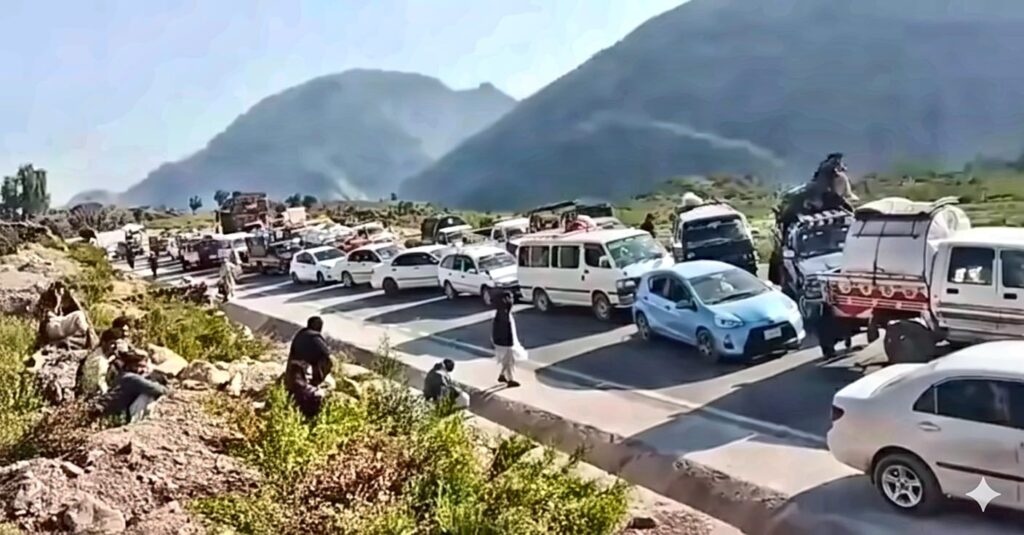
For families who fled their homes earlier this year amid the threat of military operations, what was supposed to be a temporary displacement has stretched into months, with a promised return repeatedly delayed.
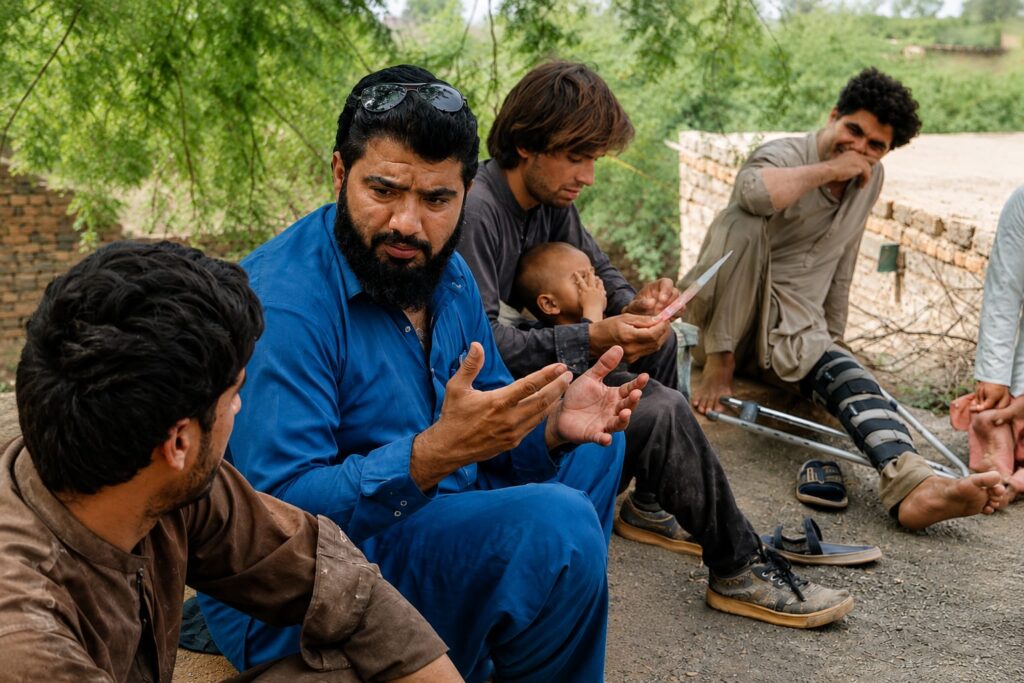
Khan Syed has lost count of how many times his children have fallen sick since the family left Tirah.
Recently, he carried his six-year-old daughter to the Tehsil Headquarters Hospital in Bara after she suffered from a fever for four days. Doctors diagnosed her with malaria. The hospital provided the free medicines available, but Syed had to buy the rest from the market.
“We have had skin infections, measles, diarrhea, and now malaria,” he said. “We are not asking the government for anything. Just let us go home.”
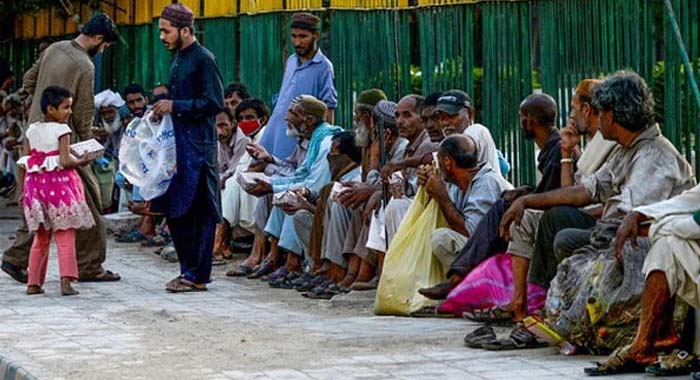
That plea is echoed across makeshift settlements in Khyber, Peshawar and Nowshera, where more than 40,000 families from Tirah Valley have been living since early this year.
Health system under pressure
The displacement has placed enormous pressure on Bara’s main public hospital.
According to hospital data, monthly outpatient visits have roughly doubled since the displacement began, rising from about 9,000 to 18,000. Nearly one-quarter of those patients are children.
Emergency room cases have increased dramatically, from about eight a month to more than 1,500, hospital officials said.
The facility was already serving roughly 600,000 people, including patients from neighboring districts. Despite the surge in patients, officials said the hospital has received no additional staff or funding.
Dr. Muhammad Rafiq, a pediatrician at the hospital, said children displaced from Tirah are particularly vulnerable because of differences in climate and living conditions.
“There’s a real difference between the weather in Tirah and here,” he said. “The higher temperatures make it easier for these illnesses to take hold.”
He said the most common health problems among displaced children include skin diseases, gastrointestinal illnesses, malnutrition, malaria and measles.
Crowded shelters, unsafe drinking water and poor sanitation are contributing to the spread of disease, health officials said.
Measles cases rise
Health officials have also linked the increase in measles cases to children missing routine vaccinations during years of insecurity in Tirah.
The Health Department recorded 128 suspected measles cases in Khyber district by mid-August, including 105 confirmed cases. That compares with 120 cases recorded during the whole of the previous year.
One health official, speaking on condition of anonymity, said two children had died from measles. Authorities have not independently confirmed those deaths.
Subat Khan Afridi, spokesperson for the Tehreek-e-Mutasireen Tirah Valley, which represents displaced families, said the problem began long before the latest displacement.
He said nearly three years of insecurity had left health centers in Tirah largely nonfunctional, while many children missed polio and other routine vaccinations.
“Barely one percent of children were vaccinated,” Afridi claimed. The figure could not be independently verified, although officials acknowledge that vaccination coverage in Tirah declined sharply during the conflict.
Vaccination campaign launched
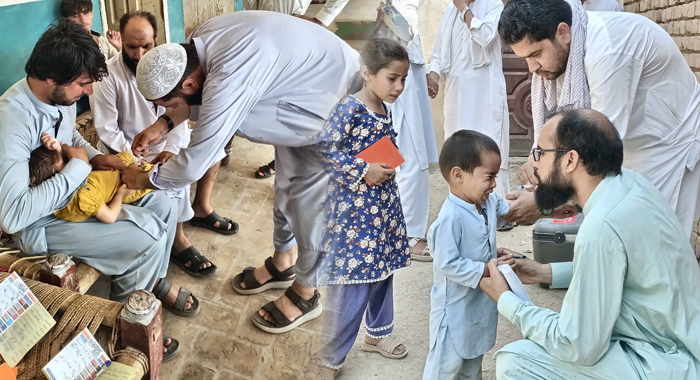
Authorities have responded with a catch-up immunization campaign.
From August 10 to 15, health teams worked across Bara, Jamrud and Landi Kotal, targeting nearly 3,000 children for vaccination against measles and 11 other diseases. Around 190 vaccinators were deployed.
A separate campaign focused on 1,746 children from Tirah.
More than 20 families have so far refused vaccination, according to a Health Department official. The official attributed the refusals to a dispute over government assistance.
Some families say they are being denied cash assistance because their names are not included in Pakistan’s polio database, even as health teams arrive to vaccinate their children against other diseases.
“We want protection from disease for our children,” Afridi said, adding that his organization is willing to help resolve the dispute.
A national health challenge
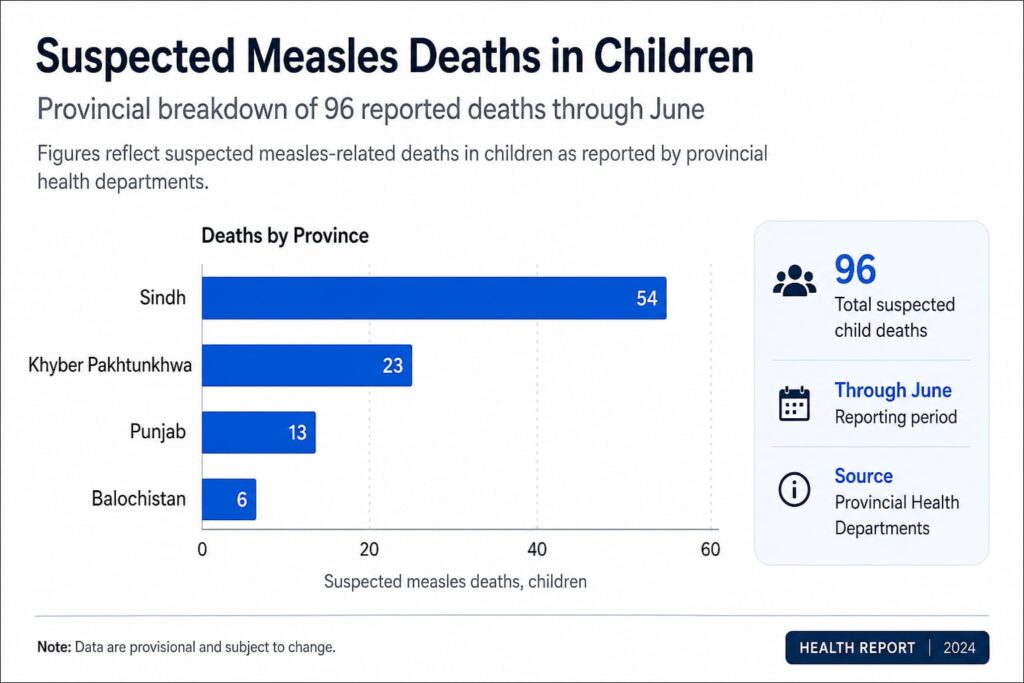
The crisis in Khyber is part of a wider measles outbreak in Pakistan.
Health authorities reported more than 20,000 suspected measles cases nationwide by June, with 96 child deaths. Sindh recorded 53 deaths, followed by 24 in Khyber Pakhtunkhwa, 15 in Punjab and four in Balochistan.
Most of the victims were unvaccinated or partially vaccinated children under five.
Khyber district has vaccinated more than 43,000 children this year, around 81% of its target. In neighboring Peshawar, however, more than 108,000 children remain overdue for scheduled vaccinations, while nearly 8,800 children were missed entirely during the most recent campaign.
Women and girls face additional risks
For displaced women and girls, the health crisis brings additional challenges.
Dr. Surayya Javed, a gynecologist running a private clinic in Bara, said poor housing, limited resources and inadequate access to clean water and sanitation have contributed to skin problems, stomach illnesses and infections among displaced girls.
Adolescent girls also face difficulties maintaining menstrual hygiene without reliable water supplies.
The lack of privacy in shared shelters can make matters worse, she said, with some girls reluctant to discuss their health problems with parents or medical staff.
Families struggling to afford treatment
Not every health crisis among displaced families is caused by infectious diseases.
Rahim Shah, a truck driver working for a construction company in North Waziristan, fled Tirah in January with members of his extended family. They now rent a small house near Bara’s market.
One of his daughters developed an eye condition after displacement. Doctors told him she needed surgery costing about 150,000 rupees, or roughly $530 — an amount he cannot afford.
“She can’t see anything,” Shah said.
Four other children in the family are receiving treatment for skin diseases. Shah said he has spent months borrowing money from acquaintances to pay for medical care.
Return home repeatedly delayed
The displacement was initially expected to be short-lived.
Families began leaving Tirah in early January and were told they could return by February. Nearly eight months later, registration and financial assistance remain incomplete.
Official records show about 34,000 families registered during the first phase, while documentation for another 12,000 families from a second phase has been submitted to district authorities.
Around 19,000 first-phase families have had their status verified and received transport assistance and short-term support.
Officials said there is no separate count of children among the displaced population.
The government initially promised that families would be able to return home by April 10. That deadline has since been repeatedly postponed and most recently moved to October 10.
Residents say the new deadline could create another humanitarian problem because it coincides with the onset of severe winter weather in Tirah, leaving families little time or money to repair damaged homes before temperatures fall.
“This is a time when Tirah has severe weather,” one resident said, warning that the delayed return could trigger a second humanitarian crisis.
Aid restrictions raise concern
The provincial government has not authorized non-governmental aid organizations to operate among the displaced Tirah population, according to Afridi and child rights activist Imran Takkar.
They say the restriction is widening gaps in health, education and protection services for women and children.
Afridi also alleges that more than 170 people were killed and more than 200 injured during unrest and displacement between 2023 and January this year, most of them women and children.
He further claims that compensation promised by the provincial chief minister — one crore rupees, or about $36,100, for each death and 25 lakh rupees, or about $9,000, for each injury — has not been paid.
According to Afridi, district authorities instead provided about 1 million rupees for each death and between 30,000 and 50,000 rupees for each injury.
These casualty and compensation claims, made by the community’s advocacy group, could not be independently verified with provincial authorities.
Children’s rights at stake
Takkar said the crisis should be viewed as an issue of rights rather than charity.
Displacement exposes children to greater risks of family separation, violence and trafficking, while disrupting education and access to healthcare, he said.
Loss of family income can also increase the risk of child labor and early marriage, particularly among displaced girls.
“Authorities must ensure that displaced children have access to their basic rights, including life, protection, education and family unity,” Takkar said.
He called for safe housing, clean water, food, medical treatment, vaccinations and psychological support. He also urged authorities to establish mechanisms to prevent family separation and child labor and create temporary learning centers so children can continue their education.
For now, Dr. Rafiq’s advice to parents offers one of the few immediate defenses available: keep homes clean, boil drinking water, remove standing water to reduce mosquito breeding and protect children from extreme heat.
Khan Syed’s daughter recovered from her fever within days of being diagnosed with malaria.
But for her family — and thousands of other displaced families from Tirah — the larger question remains unanswered: when will they be able to go home?
Names of patients and family members are as provided by sources. Some figures, including casualty totals and compensation amounts attributed to the Tehreek-e-Mutasireen Tirah Valley, are claims made by displacement-affected communities and could not be independently verified with provincial authorities at the time of publication.